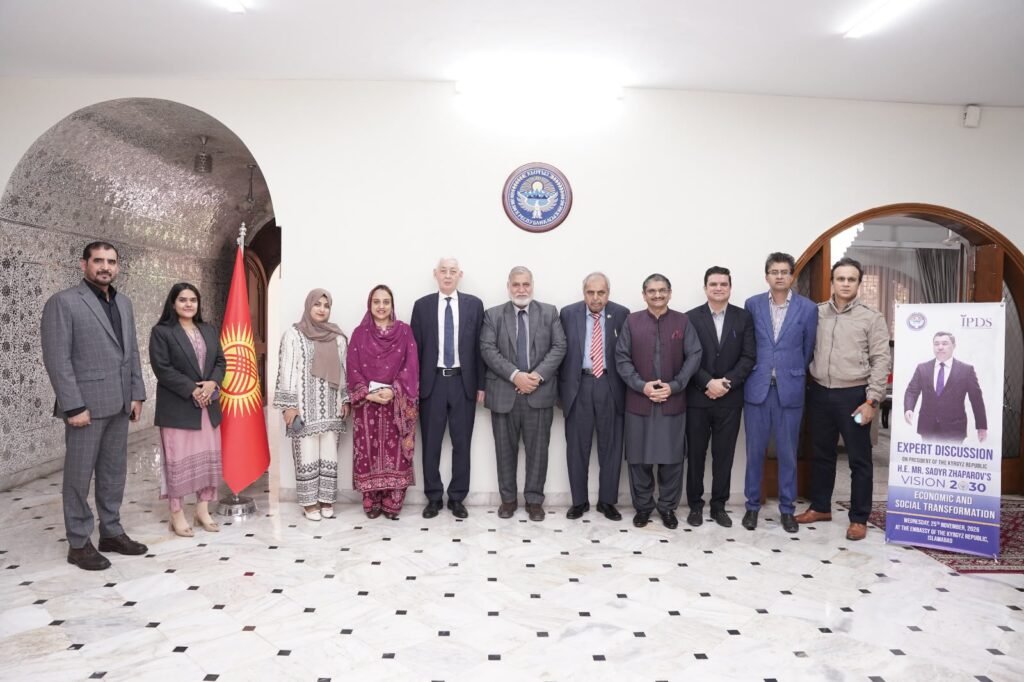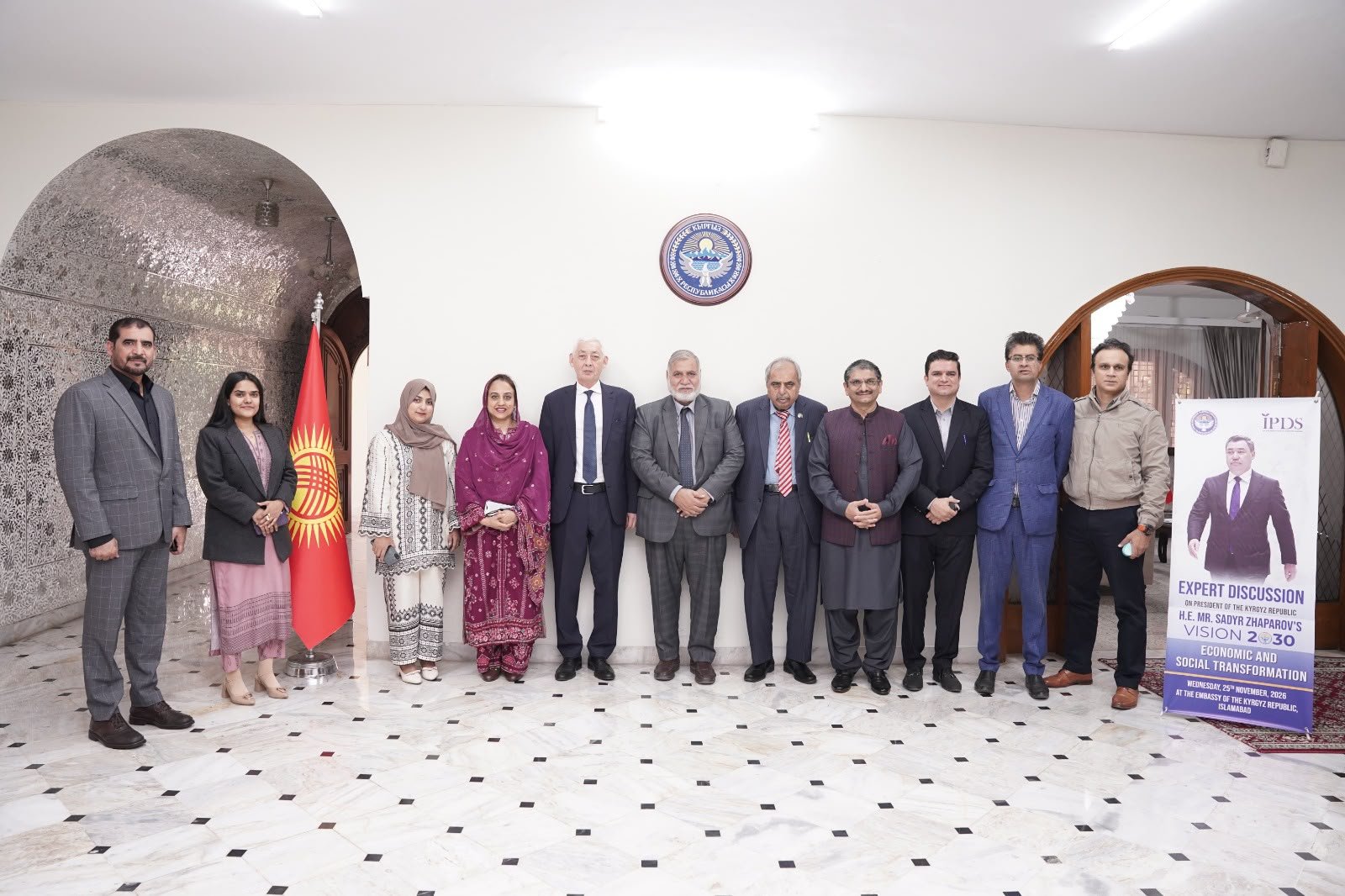
Islamabad (TDI): The one voice that was central to an expert discussion held at the Embassy of Kyrgyzstan in Pakistan on Wednesday suggests that the country’s 2030 Vision stands out for its human-centric outlook.
The discussion titled “President of the Kyrgyz Republic H.E. Mr. Sadyr Zhaparov’s Vision 2030: Economic and Social Transformation” was organized by the Embassy and the Institute of Peace and Diplomatic Studies (IPDS), and brought together academic voices to discuss the Vision 2030 delivered and outlined by the President of Kyrgyzstan — H.E. Mr. Sadyr Zhaparov — on October 21, 2026. Officially titled “National Development Program of the Kyrgyz Republic until 2030,” Vision 2030 is a policy document that sets out the priorities of the state for the next five years.
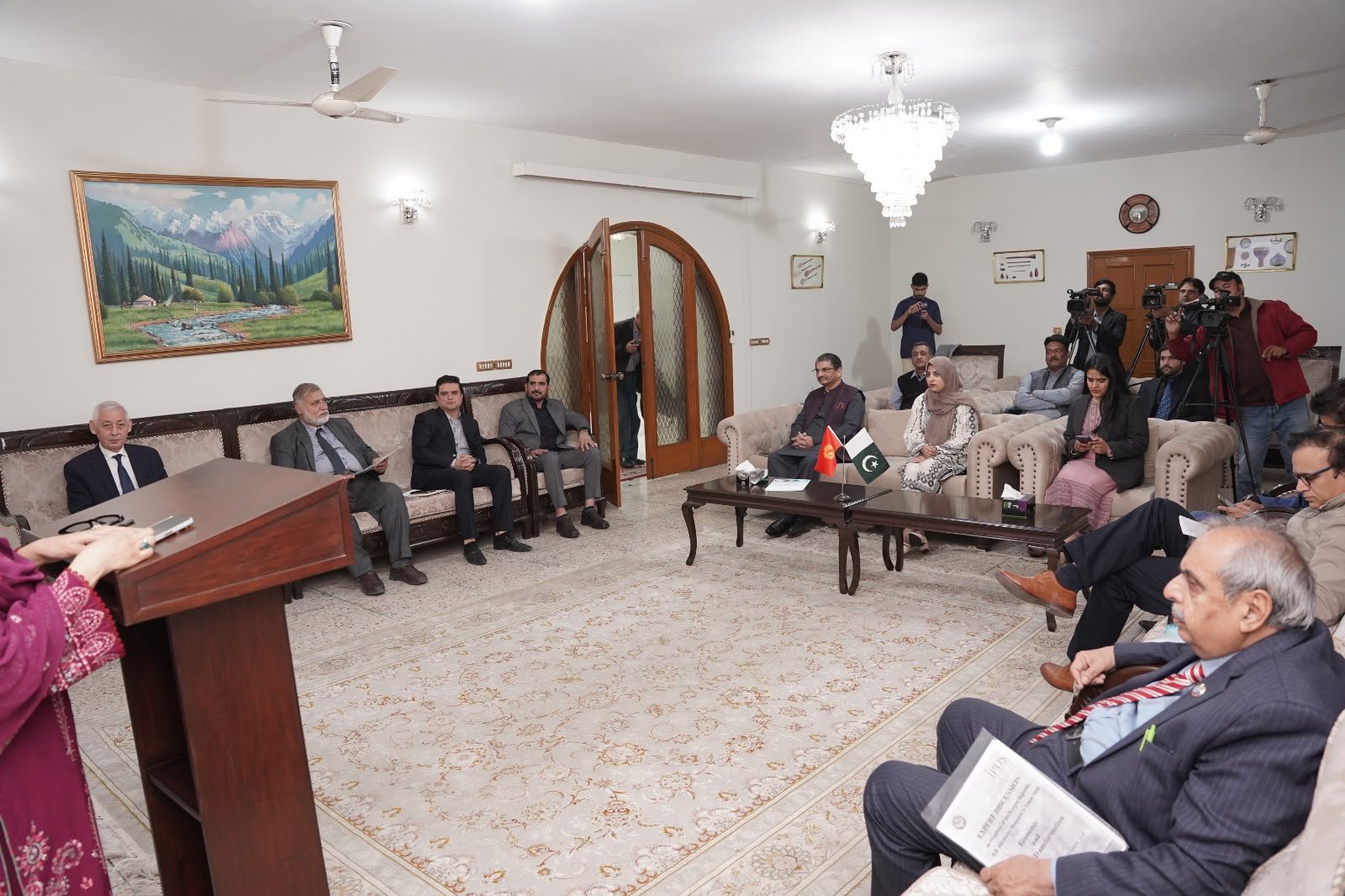
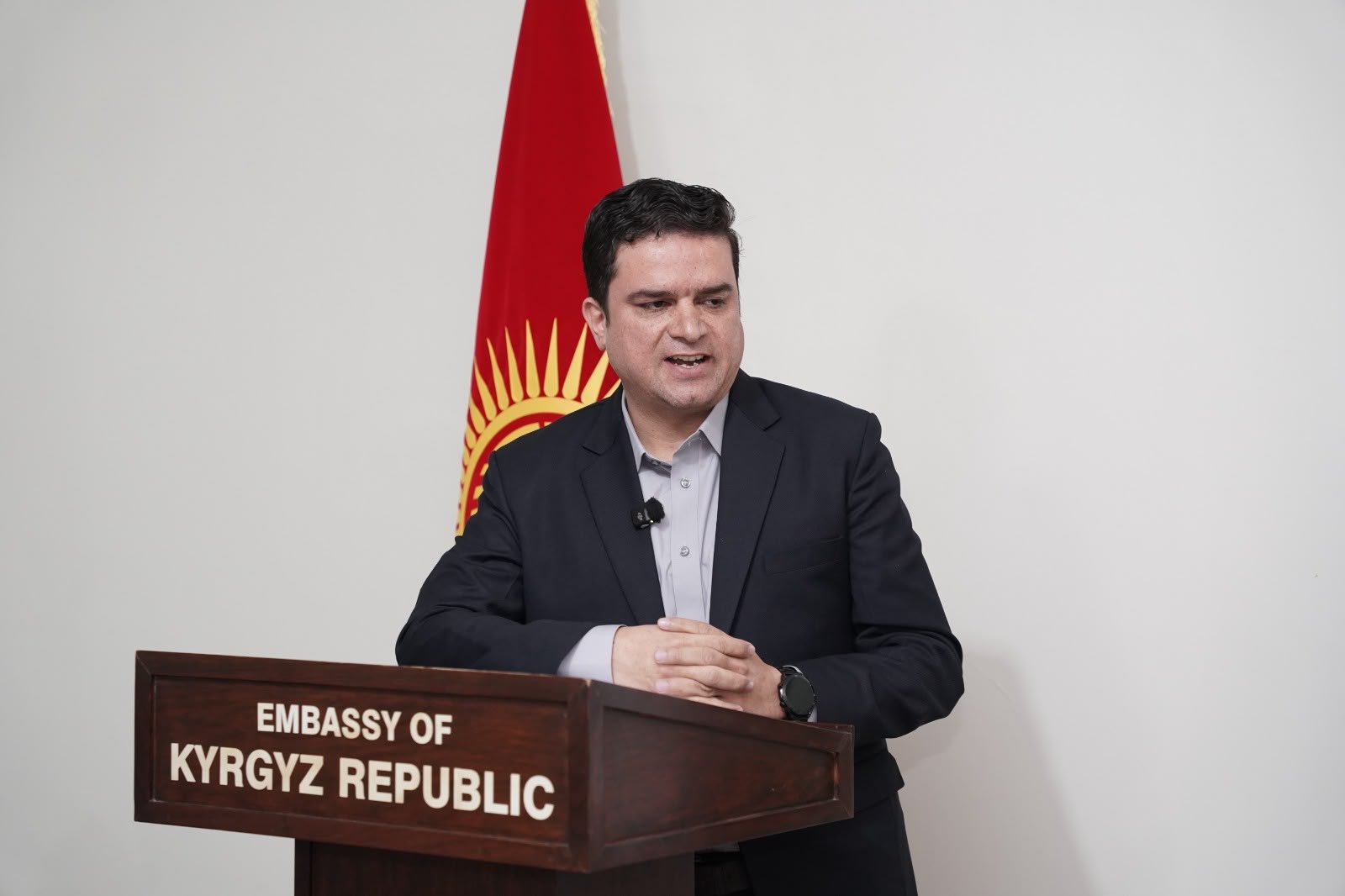
The Chargé d’Affaires and Minister-Counsellor of the Embassy, Mr. Aibek Tilebaliev, captured the progress made over the last five years in his opening remarks. He said that the resolution of border issues with neighboring Uzbekistan and Tajikistan was a major breakthrough achieved in this time. He opened his address by reiterating that Pakistan and Kyrgyzstan enjoy a historic relationship based on political, economic, and cultural ties. Tilebaliev also highlighted the large-scale administrative reforms undertaken by President Zhaparov in the last five years, which resulted in a threefold GDP growth between 2021 and 2024.
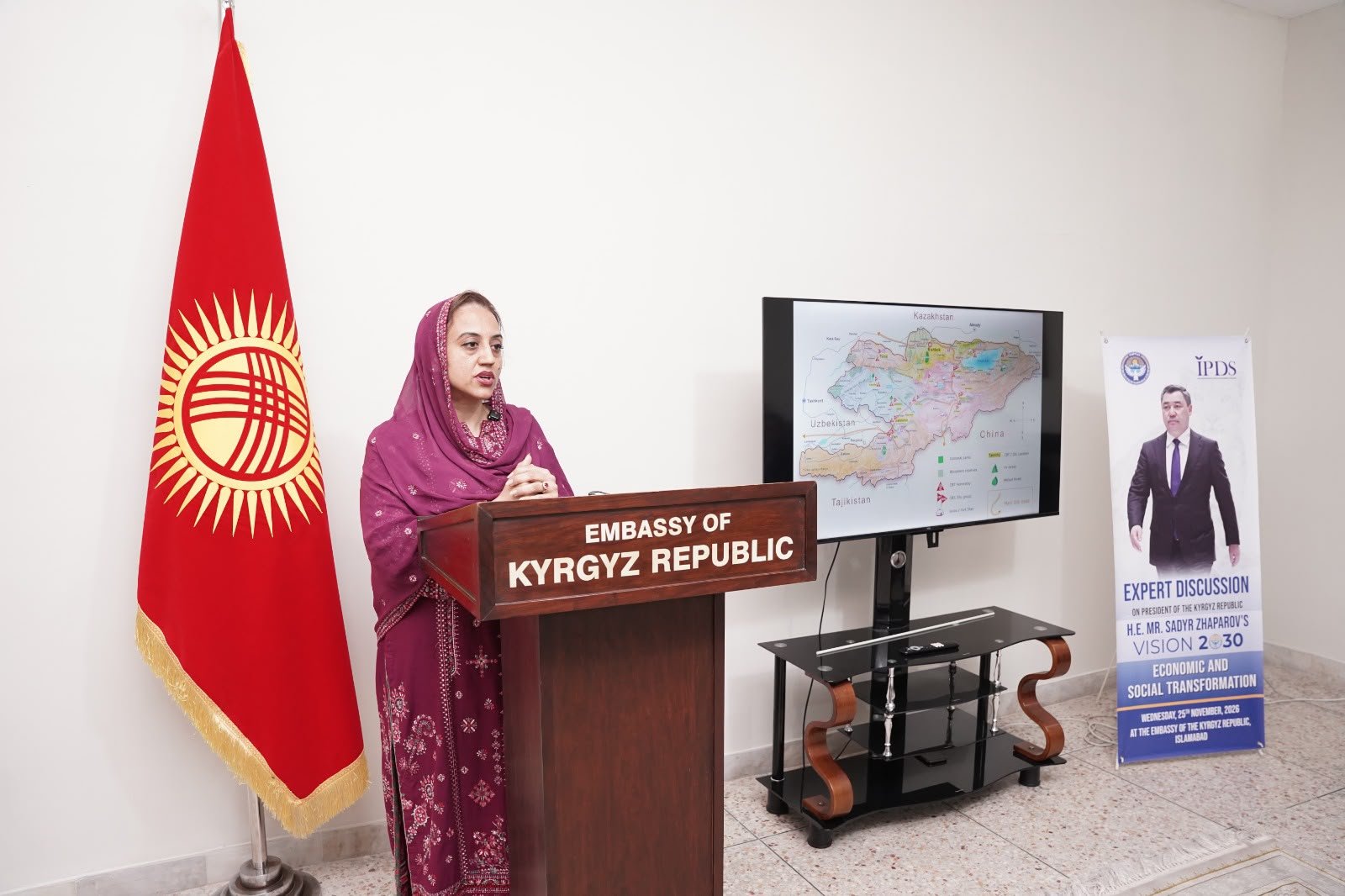
In her remarks, Dr. Farhat Asif — Founder and President of the Institute of Peace and Diplomatic Studies (IPDS) and the moderator of the expert discussion — regarded the gathering as an important talk on the development priorities of Kyrgyzstan. She noted that Vision 2030 has placed economic transformation at the center, and that it treats connectivity not just as an isolated goal in itself. Human development is being recognized as a fundamental pillar of the country’s development while the financial system is an enabler of this development, Dr. Farhat added.
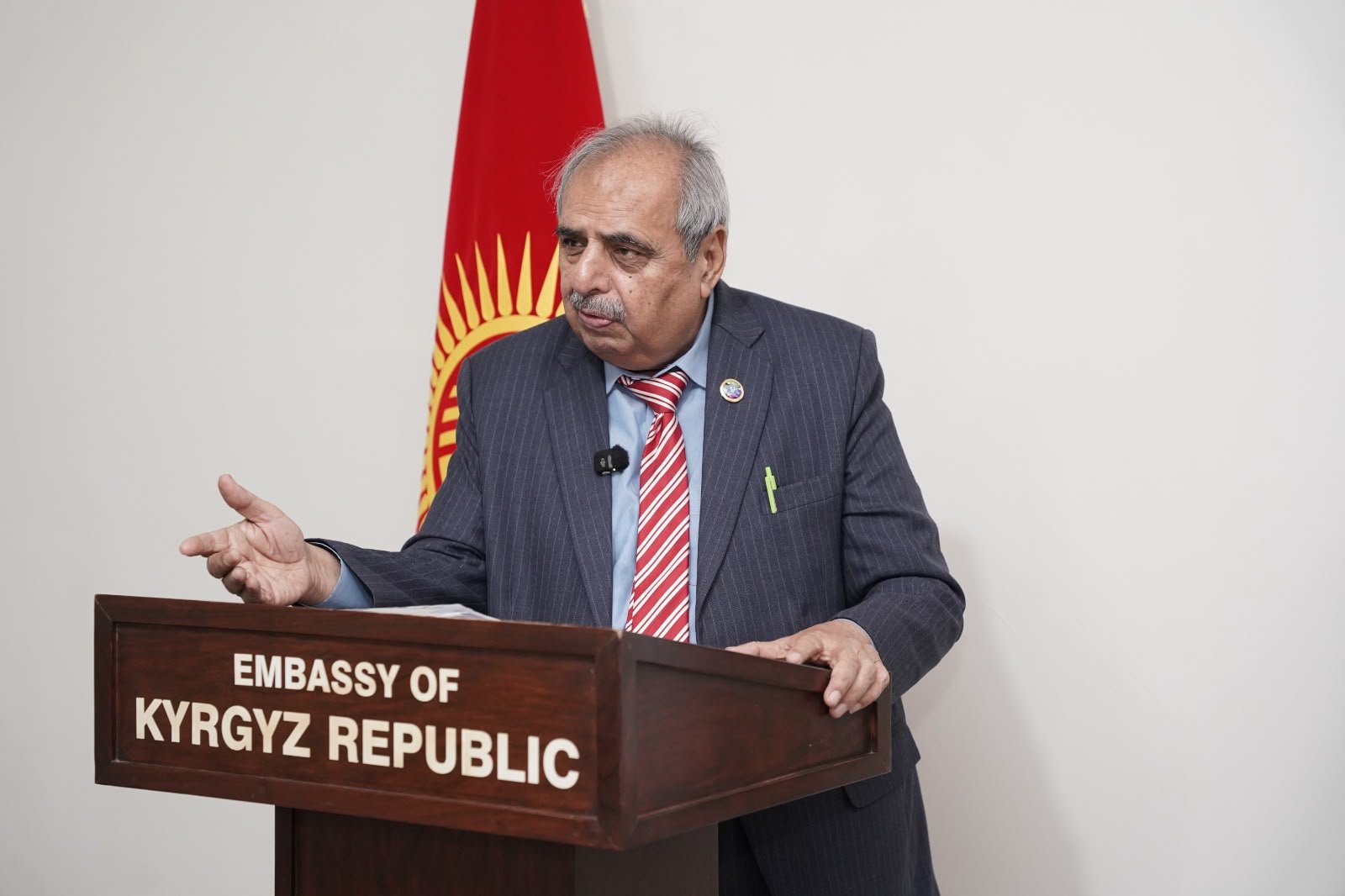
Reflecting on trade and finance, President of the Kyrgyzstan Trade House in Pakistan — Dr. Shahid Hassan — said Kyrgyzstan has been remarkable in establishing small industry over the last couple of years, which again brings its human- and people-centric development approach to the spotlight.
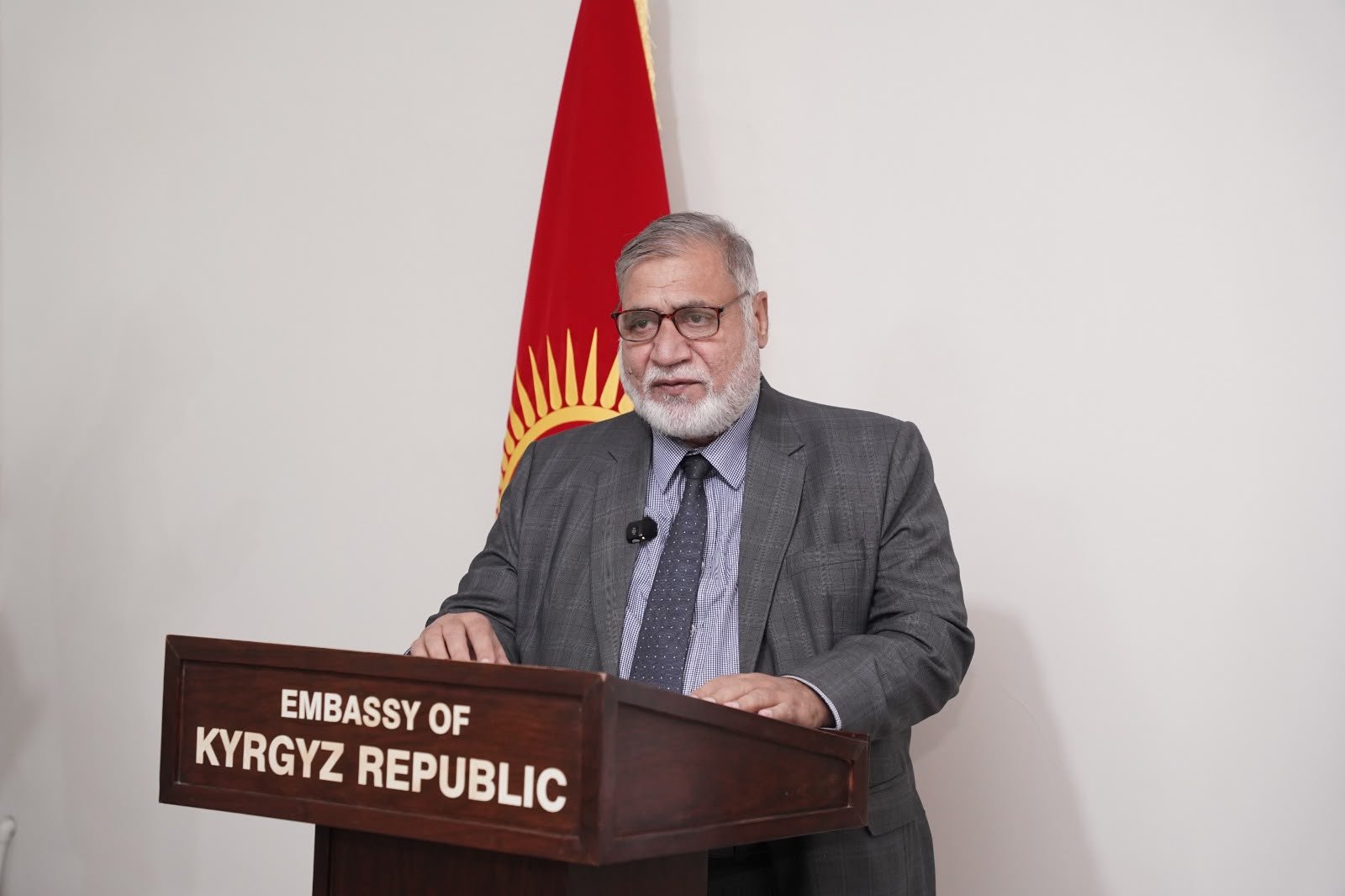
Talking about socio-economic priorities, Professor Dr. Muhammad Munir — Dean of the Faculty of Social Sciences and Humanities at Muslim Youth University — said that after building institutions over the past few years, Bishkek is now focused completely on developing human capital. He gave an example of the health sector, which Vision 2030 regards as investment in human capital, not another national expense.
Speaking about transport logistics and tourism, Managing Director of Best Trans (Pvt.) Ltd — Ramiz Ali Rabbani — highlighted that a Free Trade Agreement (FTA) between Pakistan and Kyrgyzstan will generate benefits for both sides, and will also help reduce costs for Kyrgyz companies seeking to use Pakistani ports for cargo shipments.
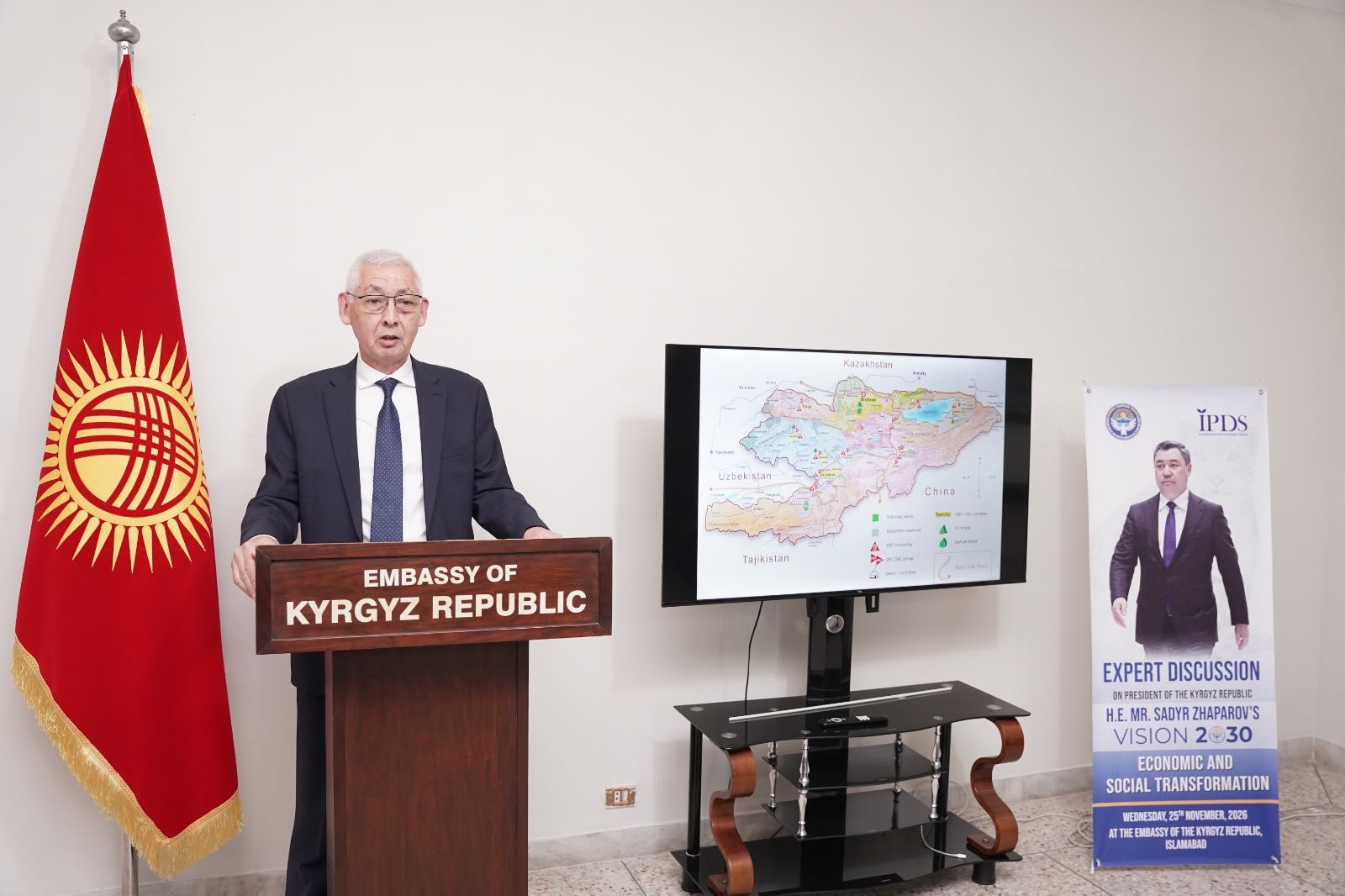
In her concluding remarks, Dr. Farhat Asif echoed the collective voice of the discussion, and said that the human is at the center of everything outlined by President Sadyr Zhaparov in his historic Vision 2030 speech.
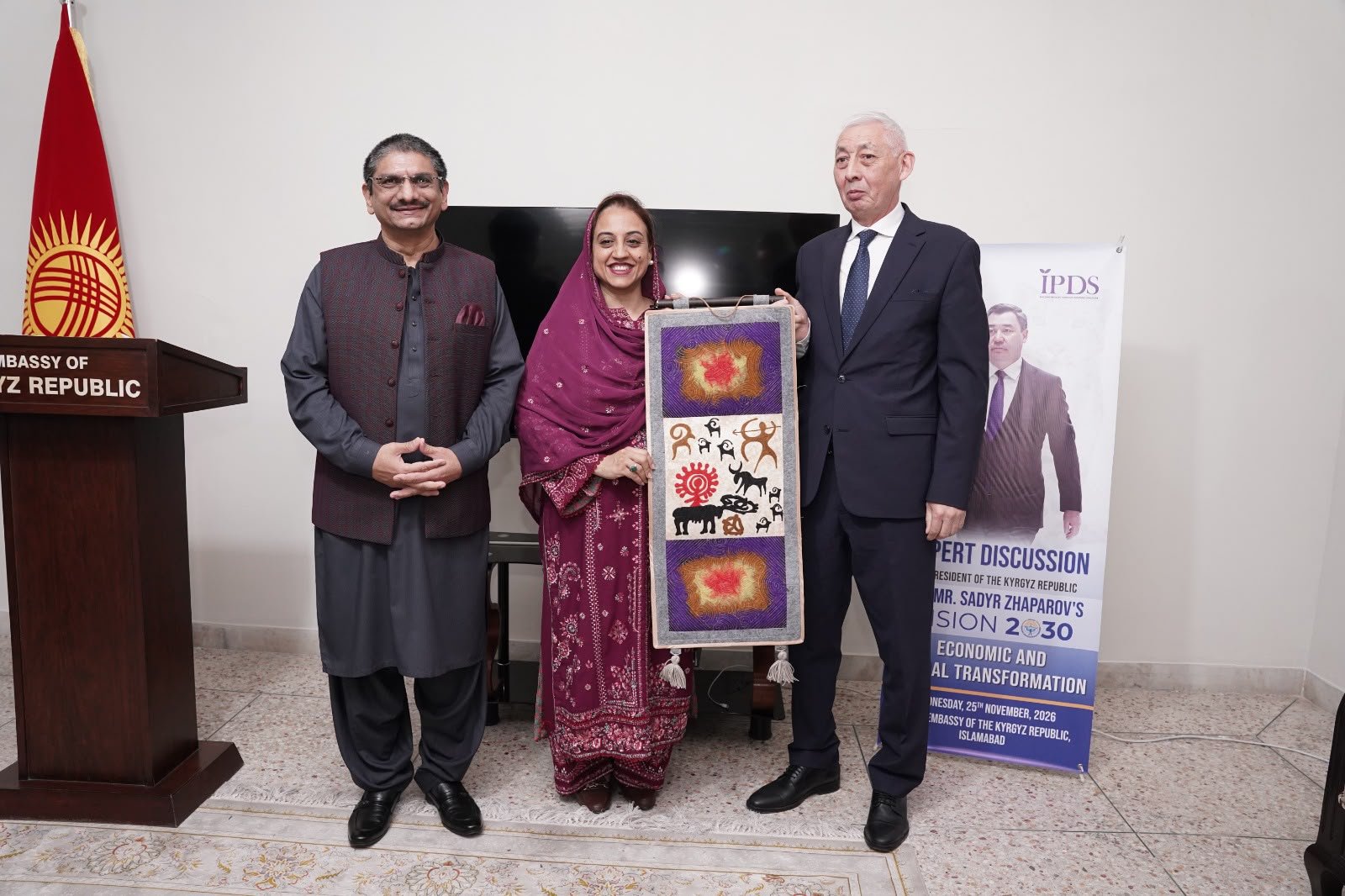
As the discussion came to a close, Chargé d’Affaires Aibek Tilebaliev gave souvenirs to the experts, representing traditional Kyrgyz craft designed into wall-hanging pieces.
This report also appears on The Diplomatic Insight.
This event was also covered by Associated Press of Pakistan (APP), Dawn, National Times, Daily Sub News, Global News Pakistan, Daily Jinnah, The Public Purview and, in Kyrgyzstan, by the national news agency Kabar. See the full roundup on IPDS in the Media.