7th International Young Diplomats School in Islamabad – Day 1
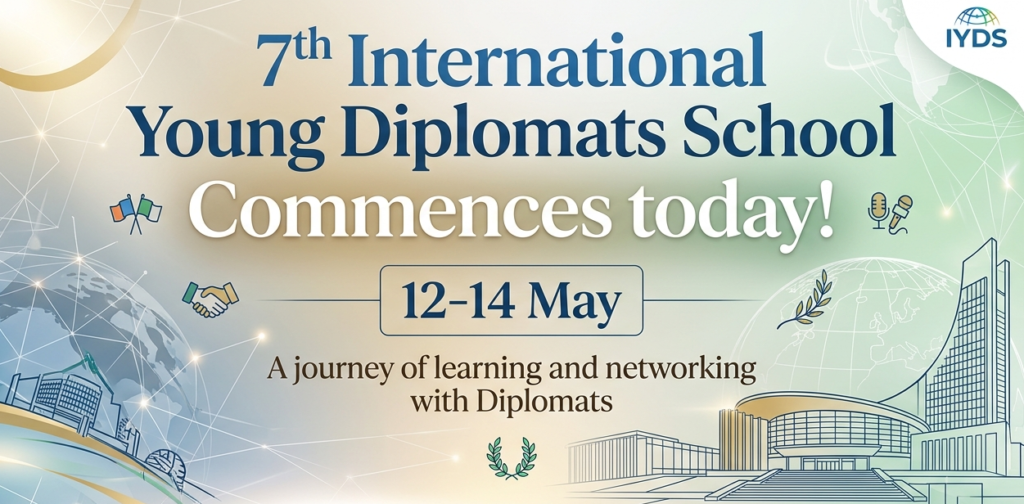
The 7th edition of the International Young Diplomats School (IYDS) kicked off on May 12, 2026, in Islamabad with an energetic and packed first day.
Organised by the Institute of Peace and Diplomatic Studies (IPDS), the three-day school brought together a diverse cohort of students and mid-career professionals from across Pakistan.
On day one, the cohort visited four diplomatic missions across Islamabad — the embassies of Egypt, Bosnia and Herzegovina, Denmark (ambassador’s residence), and Russia — engaging directly with ambassadors, chargés d’affaires, and cultural diplomats in candid, informal conversations.
The Prelude: Freedom 250 Speaker Series
One day before the official program began, IPDS arranged for the participants to attend a session of Freedom 250 Speaker Series by the U.S. Embassy’s Public Diplomacy Department.
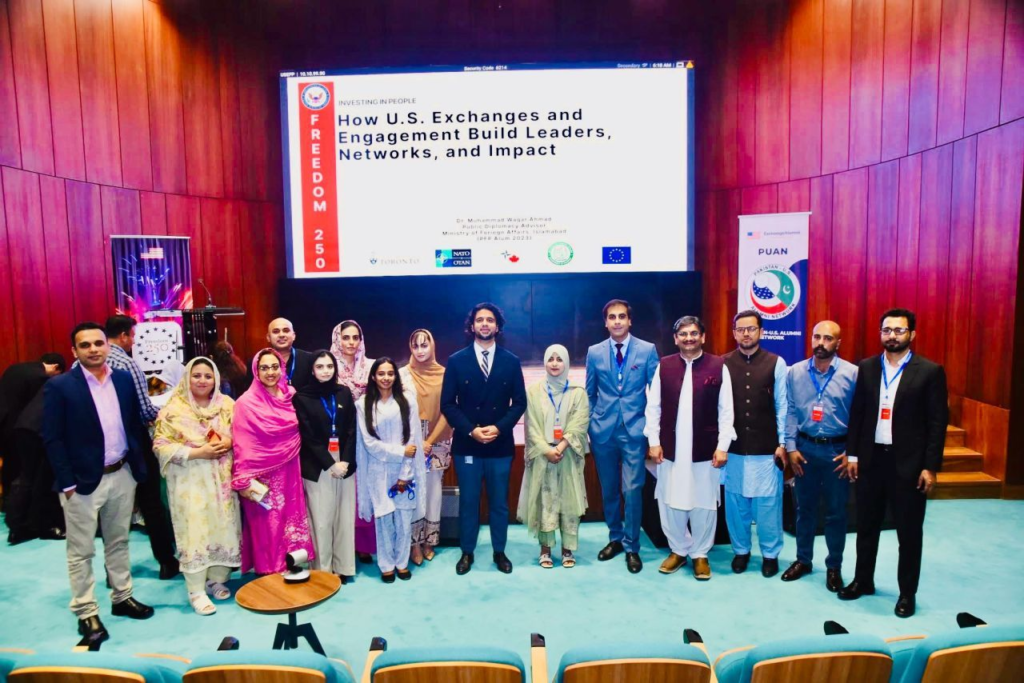
The session featured U.S. exchange alum Dr. Muhammad Waqar Ahmad in an engaging discussion on “Investing in People: How U.S. Exchanges Build Leaders, Networks, and Impact.”
The session offered valuable insights into how U.S. exchange programs contribute to leadership development, professional growth, and long-term people-to-people connections across communities and institutions.
It also provided participants with an opportunity to learn more about international exchange opportunities and alumni engagement initiatives.
Embassy of Egypt: “An Embassy is a Bridge Between Two Countries”
The day began at the Embassy of Egypt in Islamabad, where the participants were received by Ambassador Dr. Ihab Mohamed Abdelhamid.
The ambassador set the tone for the day with a perspective on diplomacy that was both personal and profound. In his welcome address, Ambassador Abdelhamid stressed that an embassy is far more than a building or a government office — it is a living bridge between two nations.
He added that diplomacy, at its core, is about trust and dialogue, and that anyone who genuinely holds these values naturally carries within them the spirit of an ambassador.
The session quickly moved into an open and engaging conversation. Participants asked questions on a range of topics.
On the subject of bilateral ties, the ambassador spoke about the deep-rooted historical, cultural, and commercial relationship between Pakistan and Egypt. He expressed his keen desire to see this relationship deepened through increased people-to-people contact.
The interaction left participants with a refreshed appreciation for a relationship that, while longstanding, still holds enormous untapped potential.
Embassy of Bosnia and Herzegovina: “I Don’t Like to Say It’s a Small Country”
From the Egyptian embassy, the cohort made their way to the Embassy of Bosnia and Herzegovina, where they were received by Ambassador Emin Čohodarević. The visit formed part of a full day of back-to-back embassy interactions that characterises the IYDS format.
Ambassador Čohodarević opened with a detailed and affectionate overview of his country — its languages, geography, climate, economy, and culture. His pride in Bosnia was immediately evident. “I don’t like to say it’s a small country,” he remarked, before walking participants through the many areas in which Bosnians have made their mark on the world stage.
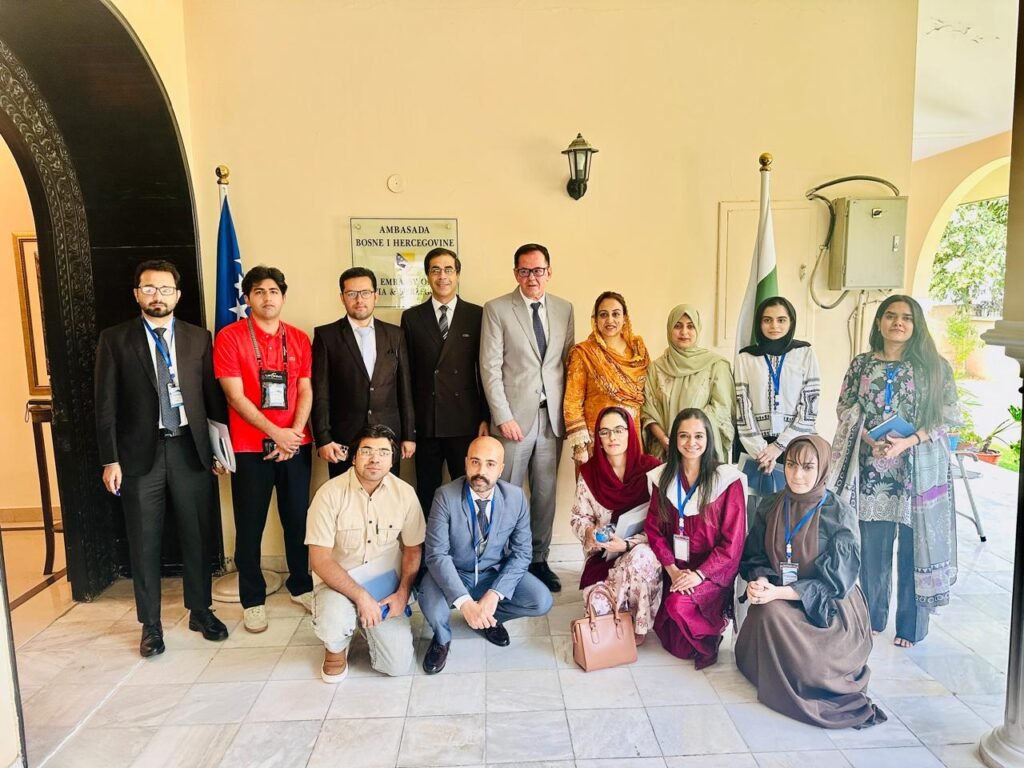
He outlined Bosnia’s foreign policy priorities and highlighted the country’s active engagement with its diaspora as a central concern. As a notable example, he pointed to the Bosnian community in the United States, which numbers around 300,000 people.
The ambassador also spoke about the special bond between Bosnia and Pakistan — one rooted in the historic solidarity Pakistan extended to Bosnia during the devastating conflict of the 1990s.
That solidarity, he noted, continues to serve as a meaningful foundation for the relationship between the two countries today.
Residence of the Danish Ambassador: Nordic Values and 50 Danish Companies in Pakistan
The third visit of the day took participants to the residence of the Danish Ambassador, Maja Derrous Mortensen. The setting added a personal warmth to the interaction even before the conversation began.
Ambassador Mortensen briefed participants on the composition and mandate of Denmark’s diplomatic mission in Pakistan, before opening into a broader discussion on Nordic identity and values.
She spoke with visible pride about Denmark’s dual membership of the European Union and the Nordic family of nations — and the distinct perspective that brings to its foreign policy.
As a Nordic country, Denmark’s development partnership with Pakistan is intertwined with that of the wider Nordic community, spanning areas such as green energy, technology and innovation, gender equality, and multilateralism.
The ambassador gave participants a concrete sense of this engagement by noting that more than fifty Danish companies are currently operating in Pakistan.
She emphasised that Denmark and Pakistan share a long-standing relationship, with Denmark having been among the first countries to recognise Pakistan after independence.
When the conversation turned to the broader EU-Pakistan trade relationship, Ambassador Mortensen described the recent EU-Pakistan Business Forum as highly substantive. “There was a spirit of turning challenges into opportunities,” she reflected — capturing the optimistic mood of an engagement that continues to grow in ambition.
The visit was one of the more intimate interactions of the day, and participants came away with a richer understanding of Nordic diplomacy and the very practical ways in which Denmark engages with Pakistan.
Embassy of Russia: Comprehensive Overview of Bilateral Priorities
As the afternoon gave way to evening, the cohort concluded the day at the Russian Embassy in Islamabad.
The participants were received by Cultural Attaché Gleb Shubin, who brought a distinct approach to the interaction: visual, historical, and deliberately layered in its storytelling.
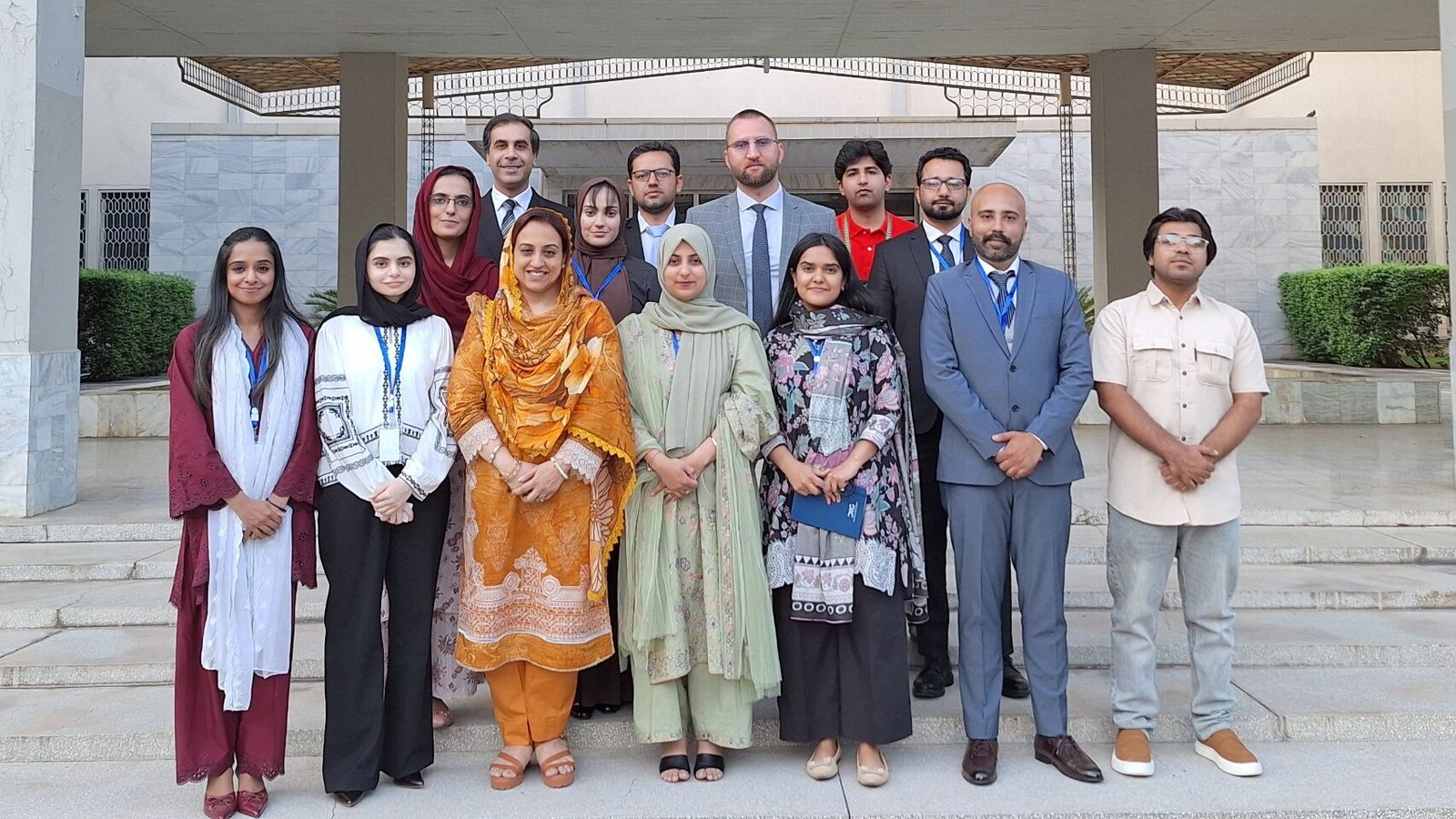
He opened by apprising the cohort of the recently celebrated Victory Day — a deeply significant occasion in Russia — through a video that documented the Soviet Union’s resistance against the Nazi German invasion during the Second World War.
Shubin then turned to the history of Pakistan-Russia bilateral relations, walking participants through key moments through curated visuals.
A third segment highlighted Russia’s openness to international students, including from Pakistan. Participants were briefed on the Russian government’s scholarship programs and how Pakistani students can access higher education in Russia. This practical piece of information generated genuine interest among the cohort.
The session was an accessible primer on one of the world’s most closely watched foreign policy actors.
The school continues across Days Two and Three, with further visits and interactions planned to deepen the cohort’s understanding of global diplomacy and Pakistan’s place within it.
The International Young Diplomats School (IYDS) is a flagship initiative of the Institute of Peace and Diplomatic Studies (IPDS).
Now in its seventh edition, it supports the public diplomacy outreach of foreign missions based in Pakistan while equipping the next generation of diplomats, policy professionals, and public leaders with direct exposure to the world of international affairs.