Survey on Perceptions of Chinese Modernization Across Five Shanghai Cooperation Organization (SCO) Countries
Written by admin
The pursuit of modernization is a common aspiration for all of humanity, yet historical experiences demonstrate that there is no singular, prescriptive path to achieving it. In the context of today’s increasingly multi-polar and diverse global landscape, Chinese modernization represents more than just the results of China’s own leapfrog development.
It has emerged as a trans-formative paradigm for countries across the Global South seeking independent and sustainable development paths. China firmly holds that modernization should never be the exclusive privilege of a few countries, but rather as a diverse exploration based on each country’s unique national conditions.
China remains committed to the principles of mutual learning and the spirit of the Global South, aiming to share the governance wisdom and developmental experiences it has accumulated in areas such as poverty alleviation, technological innovation, infrastructure construction, and social governance.
This sharing is not an export of a rigid model, but rather a collaborative dialogue on how to achieve regional prosperity through high-level openness and high-quality growth while respecting national sovereignty and cultural diversity.
To this end, under the Project of ACCWS Knowledge Sharing, the Institute of Peace and Diplomatic Studies (IPDS), Islamabad, conducted a public opinion survey across Uzbekistan, Tajikistan, Kyrgyzstan, Kazakhstan, and Pakistan, aiming to capture public perceptions, identify opportunities for strategic alignment, and lay the groundwork for a closer community with a shared future.
This report presents the key findings of the survey.
Survey Methodology
The survey was designed and administered to ensure scientific rigor and a representative sample of public opinion. Key details of the methodology are as follows:
Survey Administrators: Institute of Peace and Diplomatic Studies, Islamabad.
Geographic Scope: Five SCO member countries: Kazakhstan, Kyrgyzstan, Pakistan, Tajikistan, and Uzbekistan.
Timeline: The survey was conducted between August and September 2025.
Sample Size: A total of 2,736 valid responses were collected and analyzed.
Demographics: To ensure comprehensive results, the survey covered diverse social groups across different ages, educational backgrounds, and professions. It was also deployed bilingually, in English and Russian.
Key Findings: Public Perceptions Across the Region
The survey findings reveal a broad and deep resonance of China’s development approach across the region. The results can be broken down into five core thematic areas.
1. Economy and Trade: A Foundation of Tangible Benefits
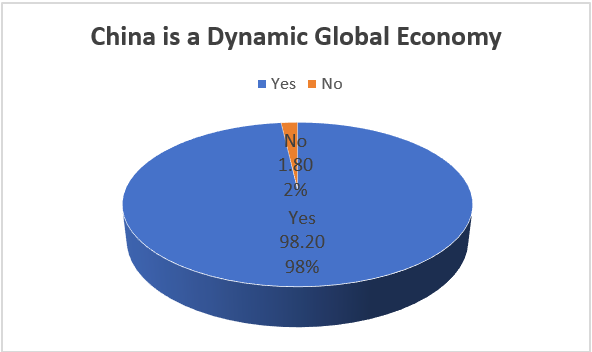
Public perception of China as a vibrant economic power is not abstract; it is rooted in tangible, everyday benefits that have solidified support for deeper trade integration. The profound positive influence of China’s economic vitality on regional markets is evident in consumer behavior, wage perceptions, and support for major infrastructure projects.
Consumer Preference: Nearly all respondents expressed a willingness to purchase Chinese products. This indicates deep market integration and the tangible impact of “Made in China” on improving the daily quality of life for local residents.
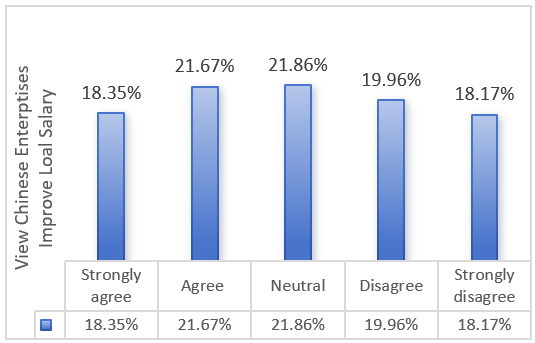
Local Wage Growth: Over 60% of respondents believe Chinese enterprises contribute to raising local salary levels. This suggests the economic partnership is perceived not as extractive but as a force for improving local living standards and creating mutual benefits.
Infrastructure Impact: More than 50% of participants view projects like the China-Kyrgyzstan-Uzbekistan Railway as a key driver for regional connectivity. This highlights strong public support for large-scale infrastructure investment as a path to economic revitalization and autonomy.
In sum, the results highlight the perception of mutual benefit in these economic ties. This perception is bolstered by the visible success of large-scale infrastructure projects, such as the China-Kyrgyzstan-Uzbekistan Railway.
These economic bonds have evolved beyond simple trade into deep integration of industrial and value chains, providing a solid material foundation for the modernization and economic autonomy of regional states.
2. Development Philosophy: The Replicability of Chinese Modernization
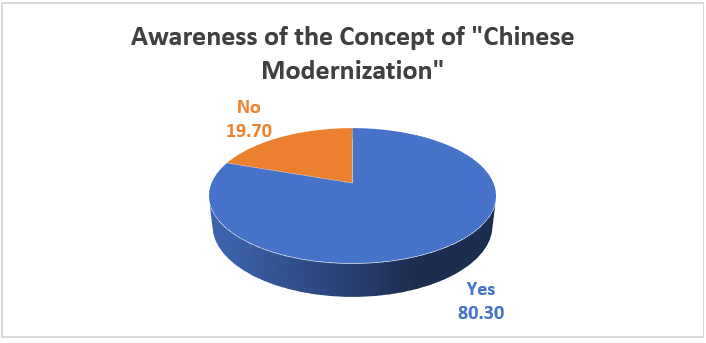
Regarding development philosophy, the Chinese path to modernization, characterized by its balance of universal values and specific national characteristics, has found a broad and deep resonance. Data indicates a high level of public awareness and resonance with the concept of “Chinese modernization.”
Crucially, more than 60% of the public believes that this model possesses significant learnable value and can serve as a useful reference for their own nations as they explore development paths suited to their specific circumstances.
This conceptual consensus provides a strong psychological foundation for future cooperation. The public recognizes and appreciates core elements like “people-centered development” and “green growth”.
This makes China’s development experience a valued intellectual resource for high-level governance dialogues and think-tank exchanges. The intellectual appeal of this shared philosophy is further institutionalized through the high public trust placed in regional multilateral platforms.
3. Multilateral Mechanisms: Consolidating Regional Governance through the SCO and the Shanghai Spirit
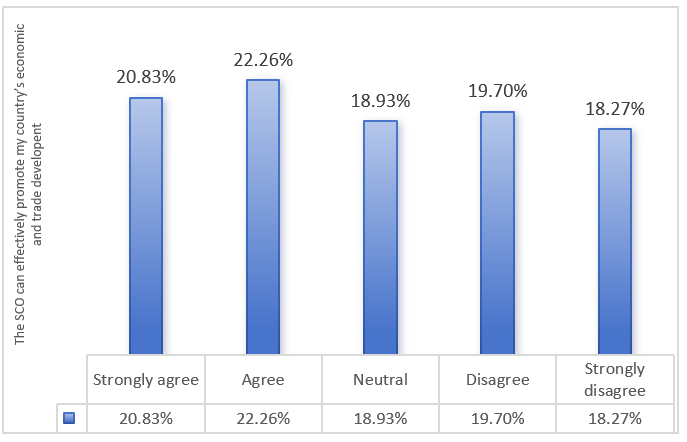
In the field of multilateral mechanisms and global governance, the Shanghai Cooperation Organization (SCO) is viewed with high expectations as a cornerstone for regional stability and cooperative growth.
The organization is viewed not just as a security alliance but as an effective mechanism for promoting cooperative growth and reforming global governance.
Finding
Survey Result
Familiarity with the “Shanghai Spirit”
Over 80% of respondents expressed familiarity.
Belief in SCO’s Role in Enhancing the Region’s Voice
Over 60% believe it enhances the region’s influence in international affairs.
Perception of SCO’s Role in Upholding Multilateralism
Seen as a vital force against unilateral hegemony.
This public trust in the SCO signifies a collective regional desire to address global challenges through collaborative, not confrontational, frameworks. This trust in multilateral governance finds its practical expression in the public’s enthusiastic support for tangible, high-impact technological cooperation.
This trust in multilateral frameworks reflects a collective desire to address global challenges through collaborative efforts.
China’s initiatives for global governance are perceived as constructive proposals for reforming the international system and moving toward a more just and equitable world order, further strengthening the confidence of regional nations to walk the path of modernization together.
4. Technological Innovation: Acknowledging Leadership and Local Empowerment
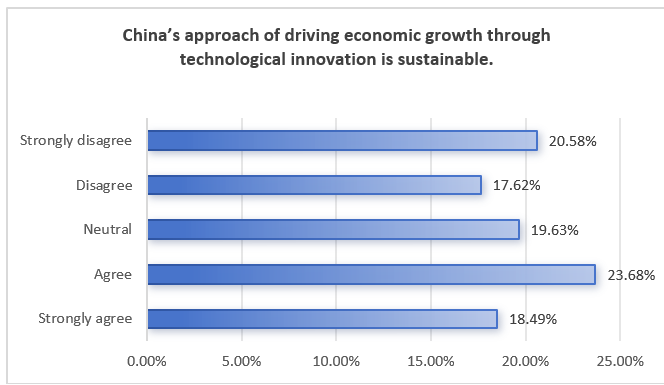
China is widely recognized as a regional engine for digital transformation, and public sentiment toward its technological prowess is exceptionally positive. The cooperation is viewed as a partnership that empowers local communities rather than simply tech imports.
Acknowledged Global Leadership: Over 80% of respondents recognize China’s leadership in high-tech sectors like AI, 5G, high-speed rail, and new energy. The primary benefit for the region is gaining access to advanced technology that can drive economic transformation and modernization.
Commitment to Local Talent: More than 60% of respondents affirm that Chinese enterprises are actively training local scientific and technical talent. The primary benefit of this “teach a man to fish” approach is the cultivation of local productive forces and the enhancement of the region’s capacity for independent innovation.
Technological cooperation is thus perceived as a sustainable bond that supports the region’s intelligent and green transformation while delivering direct benefits to its citizens. The perception of technology transfer as a tool for local empowerment creates a foundation of goodwill that is reinforced by deepening cultural and people-to-people bonds.
5. Regional Cooperation and Cultural Exchange: New Bonds for a Community with a Shared Future
The survey reveals that the deepening of people-to-people bonds serves as a vital stabilizer for long-term regional relations. There is widespread optimism about regional integration, reflected in the high level of public awareness of visions like the “China-Central Asia Community with a Shared Future.”
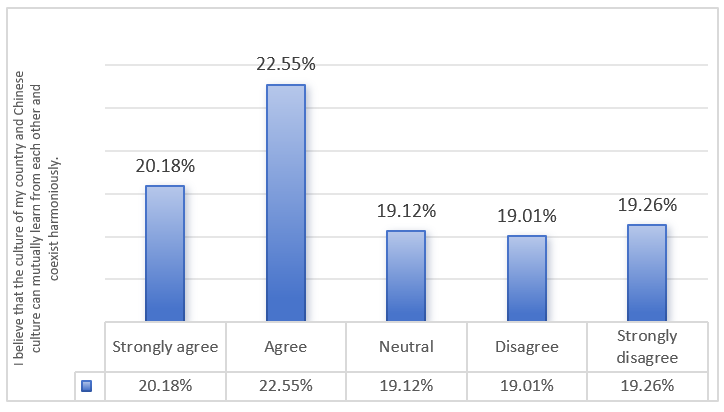
A key finding is that over 60% of respondents believe China and Pakistan should continue strengthening cultural learning from one another. This exchange is being facilitated by a range of platforms, including Confucius Institutes, vocational training centers, and the increasingly popular use of short-video social media.
The consensus is that deep cultural and educational cooperation is essential for building a resonance that transcends purely material interests. This provides powerful, bottom-up public support for high-level initiatives like the Belt and Road, giving them a sense of lived reality among the people.
Policy Implications
This report provides powerful empirical evidence of a growing positive perception of “Chinese Modernization” across Central Asia and Pakistan. Public opinion is shaped by tangible economic benefits, a resonant development philosophy, trust in multilateral institutions, and an appreciation for cooperation in technology and culture. The findings underscore a strong collective will among regional countries to partner with China on a shared journey toward modernization.
For policy-makers, this survey offers several key takeaways:
Prioritize Mutual Benefit in Future Projects: To maintain public support, future economic initiatives must continue to deliver and clearly communicate tangible local benefits, particularly improvements in wages and public infrastructure.
Deepen Governance Dialogues: The regional appetite for learnable, non-prescriptive development models creates a strategic opportunity to move beyond infrastructure and expand exchanges on governance best practices.
Leverage Multilateral Platforms: Strong public trust in frameworks like the SCO provides a mandate to utilize these platforms for consolidating regional approaches to security and development, further reinforcing collaborative partnerships.
The results serve as a powerful testament to the growing attractive force of China’s development path and the strong collective will of regional countries to act as partners on the journey toward shared modernization.
Our latest analysis, upcoming events and calls for researchers, in your inbox twice a month.
The IPDS Newsletter
Stay informed on diplomacy and global affairs
New analysis from IPDS research centres, invitations to our dialogues and events, and opportunities for researchers. Twice a month, free, and you can leave with one click.