7th International Young Diplomats School in Islamabad – Day 2
If Day One set the pace, Day Two raised it. The second day of the 7th International Young Diplomats School (IYDS) connected the cohort with four more diplomatic engagements. Each distinct in geography, character, and conversation.
The day took the cohort to the embassies of Zimbabwe, Turkmenistan, and Thailand, where ambassadors from three very different corners of the world gave the participants something no classroom curriculum can offer: unfiltered, personal, and generous accounts of what diplomacy looks like from the inside.
The evening concluded at the residence of the Ambassador of Azerbaijan, where a national day celebration offered a different kind of diplomatic experience altogether.
Visit 1 — Embassy of Zimbabwe: Natural Wonders, Tanganda Tea, and the Ties That Already Exist
Day Two opened at the Embassy of Zimbabwe, where the cohort was received by Ambassador Titus M.J. Abu-Basutu. The ambassador welcomed participants with an introductory video of Zimbabwe’s natural wonders, followed by a hands-on geography session using a map of the country.
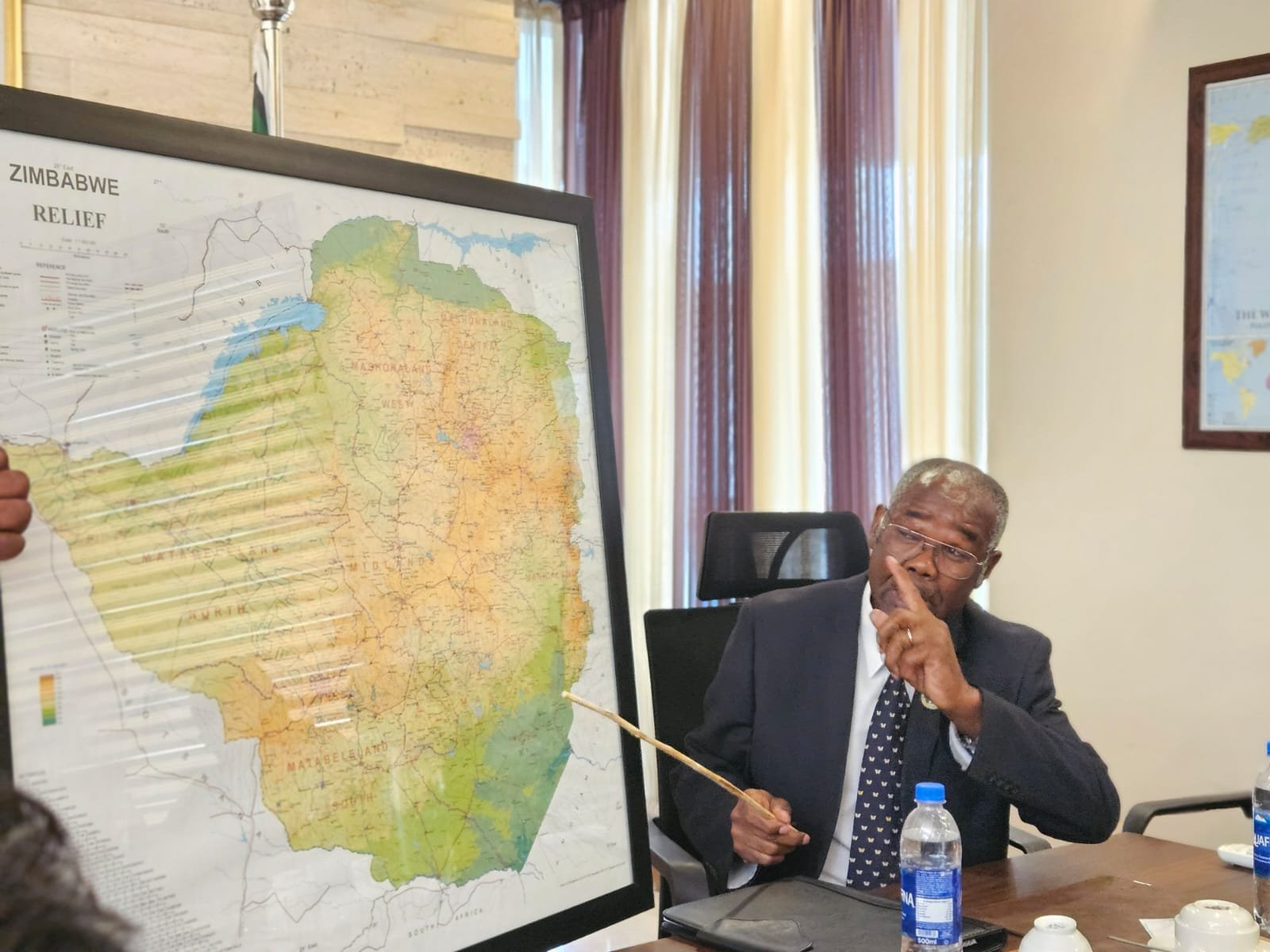
Zimbabwe is landlocked, the participants learned, but by no means limited.
The country hosts some of the world’s most renowned tourist destinations and runs a full calendar of international exhibitions designed to attract business and economic engagement.
The ambassador then walked the cohort through Zimbabwe’s foreign policy doctrine before turning to the bilateral relationship with Pakistan.
Defense cooperation features prominently: Pakistan Air Force officials travel to Zimbabwe to deliver lectures at the National Defense University there. Meanwhile, universities in Karachi, Lahore, Multan, and Islamabad host students from Zimbabwe, pointing to an active people-to-people dimension in the relationship.
By the end of the session, participants were openly expressing a desire to visit Zimbabwe in the near future.
Visit 2 — Embassy of Turkmenistan: Neutrality, Horses, and Cooperation
The second visit of the day carried a distinction worth noting. The cohort was received at the Embassy of Turkmenistan by the ambassador — who is also the Dean of the Diplomatic Corps in Pakistan — H.E. Atadjan Movlamov.
With his role as the dean, he had a unique vantage point over the entire diplomatic community based in Pakistan.
Ambassador Movlamov opened the session by tracing the historical and ancestral connections between Pakistan and Turkmenistan, framing the two countries’ relationship through the lens of shared heritage rather than just formal diplomatic ties.
He introduced Turkmenistan to the participants with an overview of its geography, culture, and geopolitical position. A country that, despite its Central Asian landlocked location, has cultivated an outsized presence in regional diplomacy.
The year 2026, participants learned, has been designated the Year of the Horse in Turkmenistan — a cultural touchstone that opened a wider conversation about the place of horses in Turkmen identity.
The ambassador spoke about the Akhal-Teke, a rare and prized breed native to Turkmenistan known for its striking appearance and endurance. He also shared that a historic horse race from Ashgabat to Moscow, last undertaken in 1945, is set to be revived.
The session turned more policy-oriented when the ambassador addressed Turkmenistan’s permanent neutrality — a formal status and a defining pillar of its foreign policy. He also expressed appreciation for Pakistan’s ongoing mediation efforts between the United States and Iran, noting that both countries share a genuine stake in regional stability and peace.
To close the session, the Ambassador distributed certificates to the participants, before joining them for tea and informal conversation.
Visit 3 — Embassy of Thailand: “Diplomacy is Not Just Confined to Signing Agreements”
The third visit of Day Two, to the Embassy of Thailand, turned out to be one of the most memorable encounters of the entire IYDS program.
Ambassador Rongvudhi Virabutr, a career diplomat of over thirty years, received the cohort with the kind of warmth and intellectual generosity that leaves a lasting impression.
A carefully curated video transported participants back through the earliest chapters of Pakistan-Thailand relations:
- A postage stamp commemorating the visit of the King and Queen of Thailand to Pakistan
- A photograph marking PIA’s inaugural flight to Thailand
- A moment when Princess Maha Chakri Sirindhorn visited the Taxila Museum and was gifted a traditional Pakistani goat,
- A visual from November 2013 when Prime Minister Nawaz Sharif visited Bangkok.
- A stamp marking the 60th anniversary of diplomatic ties between the two countries.
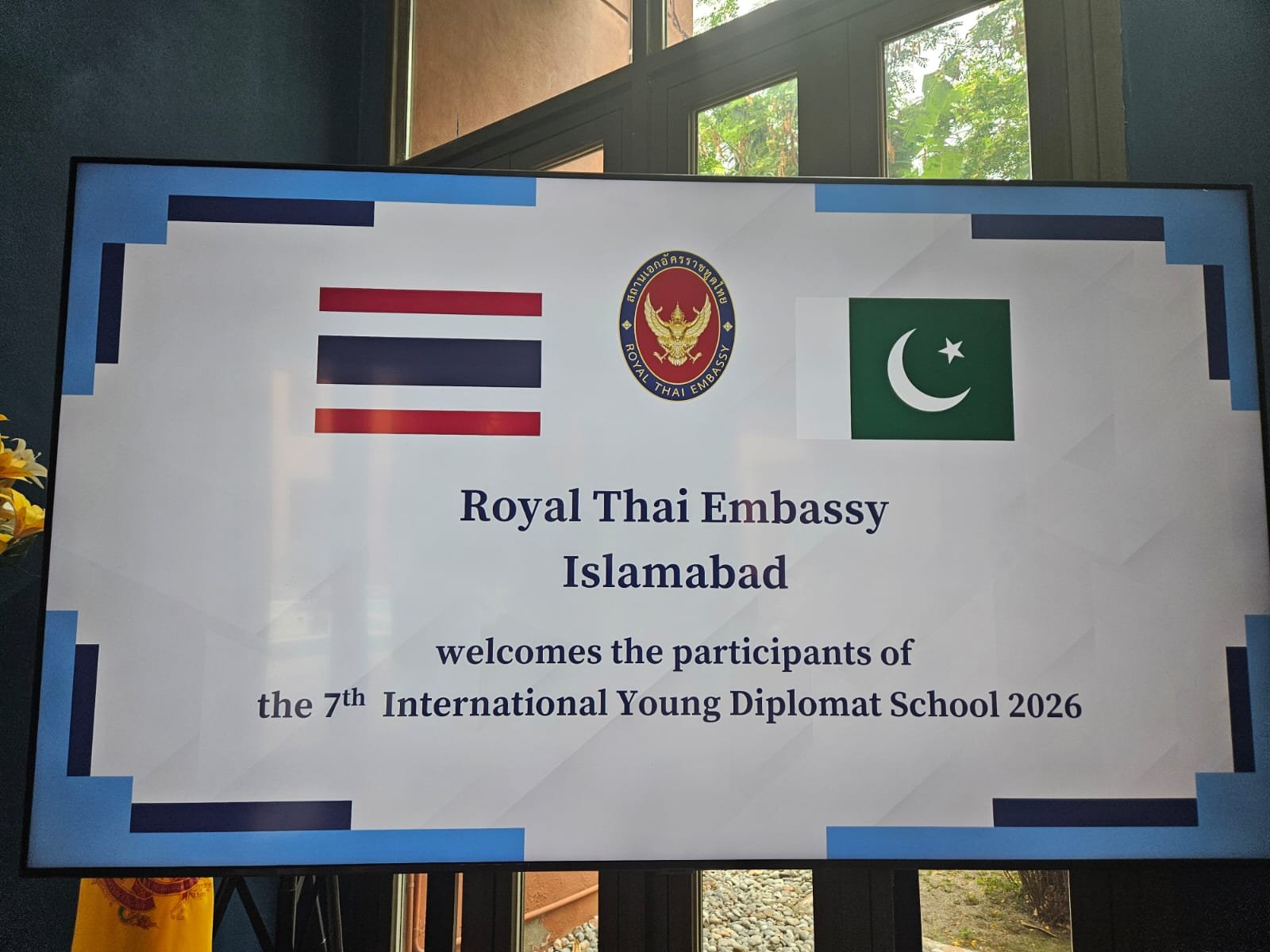
The participants were then invited for a tour of the embassy, including the kitchen garden, where Thai herbs and ingredients are cultivated and used in daily embassy meals.
In his conversation with the cohort, Ambassador Virabutr prompted participants to think through what diplomacy actually means, and then challenged them to think about solutions to Pakistan’s growing problem of waste and plastic pollution.
He was equally candid about what he believes makes a good diplomat. Drawing on three decades in the foreign service, he described the essential qualities as: the ability to think analytically, the capacity to listen deeply, compassion, and the willingness to connect with people as people.
“Diplomacy is not just confined to signing agreements,” he remarked — underscoring the centrality of negotiation, relationships, and sustained presence in turning ideas into actual outcomes.
Evening — Azerbaijan Independence Day Reception
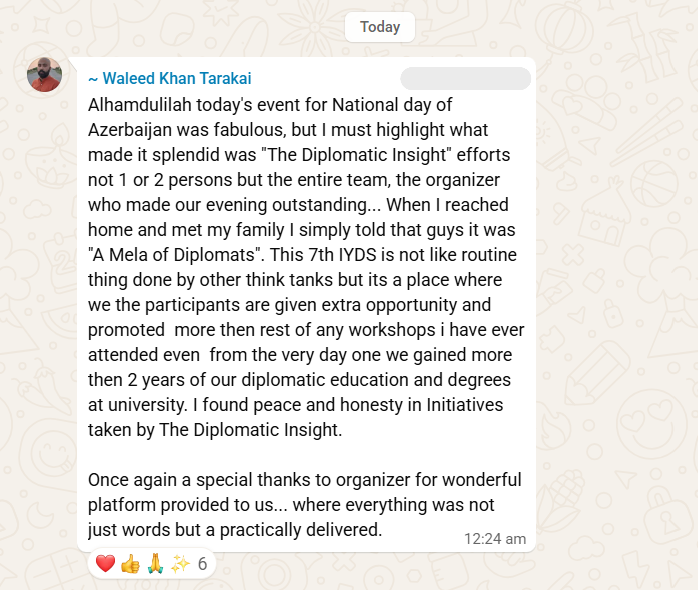
As the official programme of the day drew to a close, a selected group of IYDS participants received a special invitation extended by Ambassador of Azerbaijan, Khazar Farhadov, to join the reception on the occasion of Azerbaijan’s Independence Day.
The evening offered a different dimension of diplomatic experience: an occasion of socialization, conversation, and connection in a formal diplomatic setting.
For participants, it was an opportunity to observe the social fabric of diplomacy: the ceremonies, protocols, hospitality, and the quiet work of building goodwill that takes place in settings like these.
Reflections on Day Two
Day Two of the 7th IYDS reinforced what Day One had established: that the school works because it is built on genuine diplomatic engagement.
The range of countries alone — spanning Sub-Saharan Africa, Central Asia, Southeast Asia, and the South Caucasus — gave the cohort a sense of how varied Pakistan’s diplomatic relationships are, and how much untapped potential exists in bilateral ties that rarely make the front page.
What the participants brought back new perspectives from each visit. The school continues into its final day, with further visits and engagements planned.
The International Young Diplomats School (IYDS) is a flagship initiative of the Institute of Peace and Diplomatic Studies (IPDS).
Now in its seventh edition, it is a unique public diplomacy effort that equips the next generation of public diplomats and public leaders with direct exposure to the world of international affairs.