Home›Events›7th International Young Diplomats School Concludes
IPDS Event15May2026
Share
7th International Young Diplomats School Concludes
Over the course of this 3-day program, the cohort of the 7th International Young Diplomatic School moved through a remarkable breadth of diplomatic engagement.
During the program, participants were hosted by diplomatic missions of three Permanent UN Security Council members in Islamabad: The U.S., Russia, and the United Kingdom.
Moreover, the embassies visited spanned diverse regions of the world:
Africa — Embassy of Zimbabwe
Arab World — Embassy of Egypt
ASEAN / Southeast Asia — Embassy of Thailand
Central Asia — Embassy of Turkmenistan
The Caucasus — Embassy of Azerbaijan
European Union & Nordic Region: Embassy of Denmark
Southeast Europe: Embassy of Bosnia and Herzegovina
Alongside the bilateral missions, participants also engaged with the multilateral system through a dedicated session at the UN Resident Office, where representatives of UNFPA, UNICEF, and UNDP gave the cohort a firsthand account of the United Nations’ work in Pakistan.
Eleven engagements. Diplomatic missions of countries and institutions spanning five continents and the full architecture of the international system.
Day Three was the culmination of all of it. It was structured to move through three very different registers. It opened at the UN Resident Office, then turned inward at the Diplomatic Insight Group’s head office for reflection, and finally closed at the residence of the Acting British High Commissioner.
UN Resident Office: “Young People Are Not a Homogenous Group”
The final day began at the United Nations Resident Office in Islamabad, in a session that gave the IYDS cohort a window into the multilateral system. They learned about its agencies, its architecture, and the people who navigate it every day.
Representatives from three UN agencies were present: the United Nations Population Fund (UNFPA), the United Nations Children’s Fund (UNICEF), and the United Nations Development Program (UNDP).
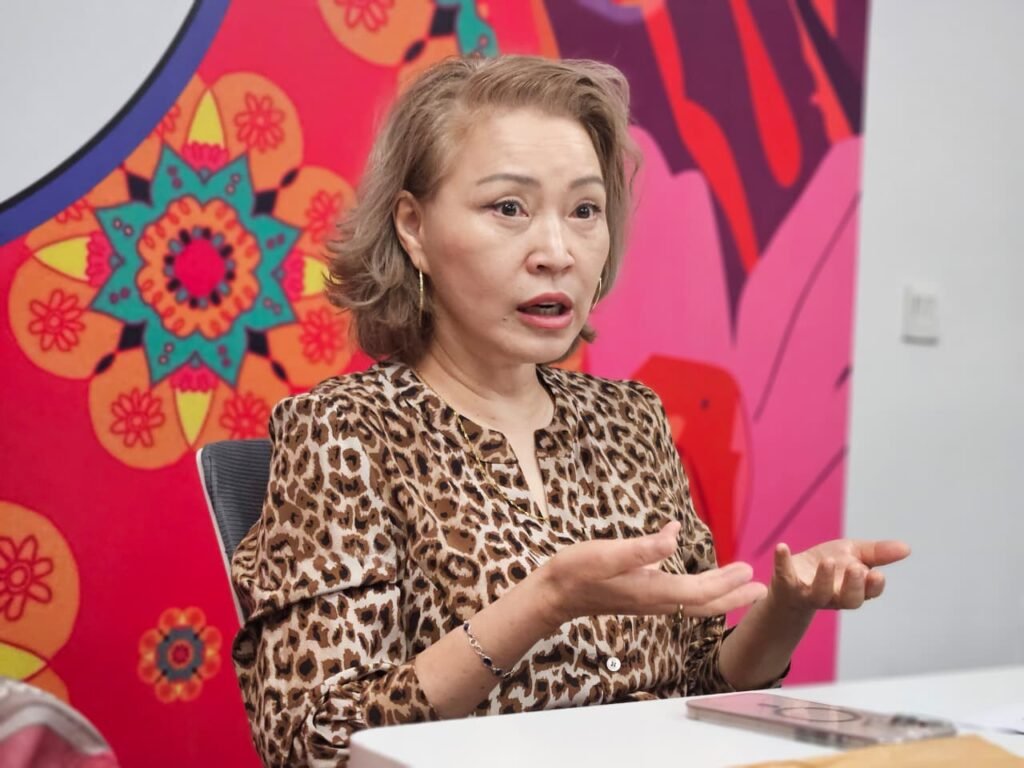
Leading the conversation was Dr. Gulnara Kadyrkulova, Deputy Representative for UNFPA. Originally from Kyrgyzstan, Dr. Gulnara’s career spans medicine, healthcare reform, statistics, and demography. She has been based in Pakistan since September 2025.
She opened with an observation that set the tone for everything that followed. “Young people are not a homogenous group,” she remarked. Her statement unpacked the complexity of designing policy for millions of people with vastly different circumstances, needs, and aspirations.
Dr. Gulnara walked participants through UNFPA’s agenda in Pakistan, which spans maternity health, democratic resilience, and the statistical capacity building of government institutions.
She spoke with visible satisfaction about the recent passage of the Child Marriage Restraint Act in Punjab, but was equally candid that the harder work now begins: building the implementation framework that gives the Act real teeth.
On the last day of the International Young Diplomats School (IYDS), participants had a chance to learn about the work of the United Nations (UN) in Pakistan, in a session that was coordinated by the UN Resident Office in the country.https://t.co/EqOOibSAWo#IYDS#Unitednation… pic.twitter.com/XlJP6KWOQH
— The Diplomatic Insight (@DiplomaticIns) May 14, 2026
Participants were engaged and probing. Their questions drew out Dr. Gulnara’s reflections on UNFPA’s presence and work in Balochistan, on gender inequality as a structural rather than individual problem, and on the complex process of advocating for and institutionalising family planning frameworks in a context as layered as Pakistan’s.
The session closed with the cohort exchanging thoughts with representatives from across the UN agencies in the room, a rare opportunity to speak candidly with the people who translate global mandates into ground-level action in Pakistan.
Interlude — DIG Head Office: A Chance to Reflect
The cohort gathered at the Diplomatic Insight Group’s head office in Islamabad. Here, the participants found the space to pause, to look back, and to speak honestly about what the past three days had meant to them.
In open conversations, the participants reflected on the experiences, the ideas that had surprised them, and the questions that the program had left with them.
The meeting with DIG staff gave participants context for the institution that had made the program possible. It was also an invitation to see themselves as part of something ongoing: a community of future leaders that Diplomatic Insight Group has been building since its inception.
They discussed what they hoped to carry forward in their careers, in their communities, and in the way they understood Pakistan’s place in the world. Along with the lessons, they appreciated the relationships and connections they’d built with the diplomatic community and with one another.
UK High Commission: People-to-People First, and Always
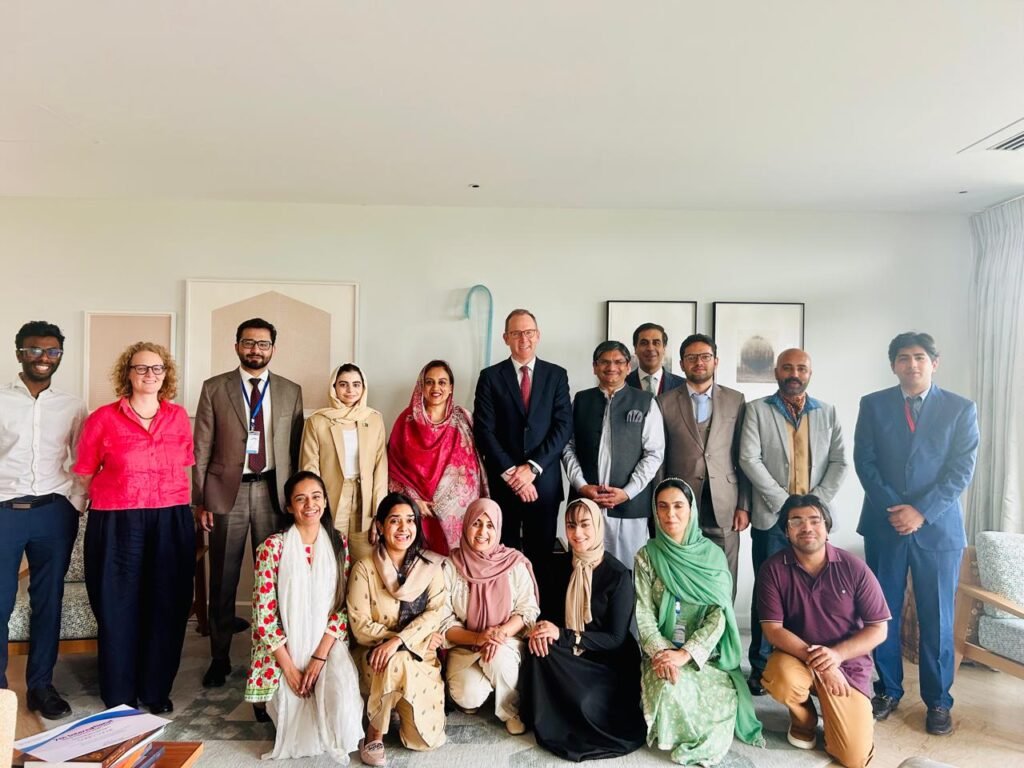
The 7th IYDS concluded at the residence of the Acting British High Commissioner, Matt Cannell.
Participants were welcomed by Cannell alongside two colleagues who would each contribute a distinct dimension to the conversation: Nicole Roberts, Political Counsellor at the High Commission, and Meran Anna Lingam, an economist working in the mission’s economic section.
Cannell himself brought twenty years in foreign service, with postings spanning Afghanistan, Bangladesh, South Sudan, Ethiopia, and New York.
The foundation of the UK-Pakistan relationship, he said, is people-to-people contact — and that foundation is deep. The consular and visa services at the High Commission are among the busiest in the mission; a practical indicator of just how much movement exists between the two countries.
The conversation then widened to a more candid, informal exchange. For participants considering careers in diplomacy, policy, or international affairs, it was exactly the kind of insight the IYDS was designed to deliver.
The session ended on a personal and warm note. Each participant was invited to share one place in Pakistan they would recommend to the British delegation.
Reflections
The 7th International Young Diplomats School formally concluded on May 14, 2026, having taken a diverse cohort of students and mid-career professionals from across Pakistan through various diplomatic engagements in three days.
Across every visit, a common thread ran through each conversation: that diplomacy is not a rarefied profession practiced only by those born into it, but an accessible, learnable, and deeply human craft.
That is the argument that IYDS makes through its unique model of direct exposure and participation in public diplomacy.