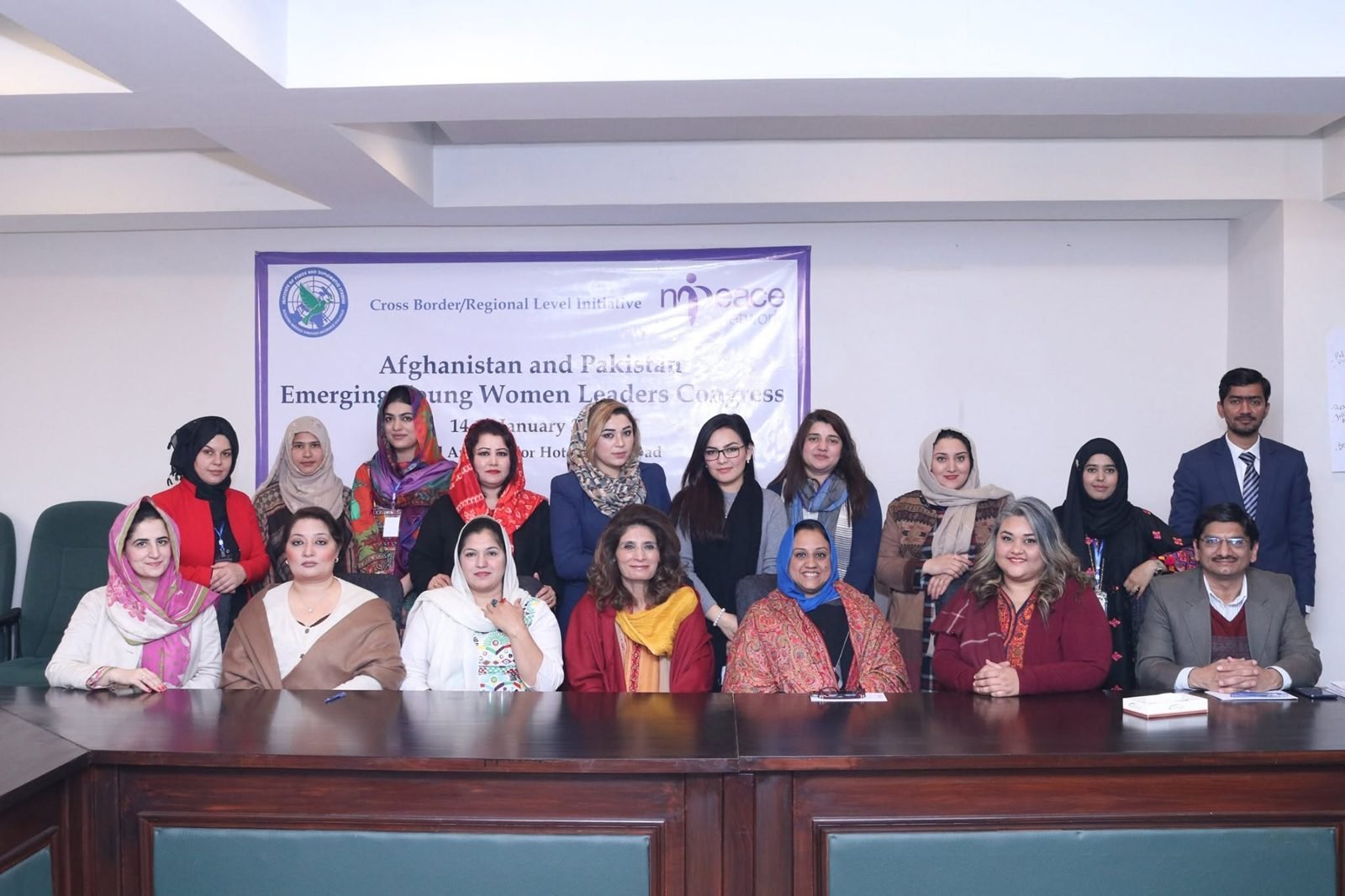
The Emerging Young Women Leaders Congress pairs young women with senior women from politics, diplomacy, public service and media. Its three editions were each built with different partners. This case sets out what each partner contributed and what followed for the participants.

Few young women in Pakistan have direct access to women already in senior roles. The Congress was designed to create that access: two days of closed mentoring workshops followed by a session open to the public.
No single organisation could fund and staff every edition. IPDS built each one with partners who brought what that edition needed: a co-organiser, a venue and network, a government programme, or regional reach.
| Hanns Seidel Foundation, Germany | Co-organised the first Congress in 2015, including a public talk by Nobel Peace Laureate Tawakkol Karman. |
|---|---|
| Inter University Consortium for Promotion of Social Sciences; National Testing Service | Partners of the first Congress. |
| Australian Government, through its High Commission | Co-organised the second Congress in 2017. |
| The City School | Co-organised the second Congress. |
| Women’s Regional Network | Co-host; presents the Congress through its Mentor Youth programme. |
| Benazir Income Support Programme | Made the 2017 cohort its Brand Ambassadors and received their project proposals. |
| N-Peace Network | Supported the 2019 Afghanistan and Pakistan Congress. |
First Congress with the Hanns Seidel Foundation: 30 young women and 19 senior mentors; Tawakkol Karman is chief guest. Source →
The foundation stone of IPDS’s Centre for Women, Peace and Leadership is signed at the Congress. Source →
Second Congress with the Australian Government and The City School: 25 young women from seven regions; BISP names them Brand Ambassadors. Source →
Afghanistan and Pakistan Congress, with the support of the N-Peace Network. Source →
A fourth Congress is in preparation. Source →
In 2017 the Benazir Income Support Programme made the cohort its Brand Ambassadors, and four committees presented their projects at ministerial level.
Evidence →In 2015 mentors from the Senate, the Women’s Parliamentary Caucus and several political parties worked with the same cohort.
Evidence →In 2019 young women from Afghanistan and Pakistan met as one cohort.
Evidence →Alumnae have gone on to Chevening Awards, the UN human rights office’s Minorities Fellowship and N-Peace Award nominations.
Evidence →The Congress gave IPDS its Centre for Women, Peace and Leadership, which convenes the programme today.
Evidence →International co-organisers, an education partner, a regional network and a government programme each made a different edition possible.
The 2017 cohort did not only attend. It designed projects for a federal programme’s beneficiaries and presented them to a Minister.
Alumnae can register with IPDS and return as mentors, so each cohort widens the network for the next.
Participant and mentor figures are taken from IPDS’s own Congress reports and its programme page.
Embassies, universities, think tanks and international organisations work with IPDS on research, dialogue, training and culture. Tell us what you have in mind.
Write to info@ipd.org.pk All case studies Partnerships in PracticeLast reviewed October 2026. Partners named in a case study can ask for corrections at info@ipd.org.pk.
Our latest analysis, upcoming events and calls for researchers, in your inbox twice a month.
New analysis from IPDS research centres, invitations to our dialogues and events, and opportunities for researchers. Twice a month, free, and you can leave with one click.