Since 2013 IPDS has opened permanent reading corners for the writers and languages of partner countries in Islamabad’s national libraries and universities. This case sets out how a corner is built, who contributes what, and what has lasted.

Embassies want their literature and language to reach Pakistani readers. Pakistan’s national libraries and universities want collections and programmes that bring students in. A corner meets both needs: a dedicated shelf and display for a country’s writers, inside an institution that will keep it.
IPDS’s role is to bring the two sides together and to give each opening a programme, usually a seminar or conference, so that the corner starts with an audience.
| Embassies and cultural centres | The partner country’s support for the corner and the ambassador’s participation at the opening. |
|---|---|
| National Book Foundation | Host of four corners; Muhammad Asif Noor has served as its Book Ambassador since 2015. |
| Allama Iqbal Open University | Host of two corners in its History Museum, opened in the university’s 50th anniversary year. |
| National Library of Pakistan | Host of the first corner, in 2013. |
| United Nations Information Centre | Partner for the UN Book Corner under the 2015 agreement. |
Heydar Aliyev Corner, National Library of Pakistan, with the Embassy of Azerbaijan (through The Diplomatic Insight). Source →
Nizami Ganjavi Corner, National Book Foundation, with the Embassy of Azerbaijan. Source →
UN Book Corner, under the agreement with the UN Information Centre. Source →
Ambassadors of Portugal and Brazil visit the National Library and the National Book Foundation to prepare a Portuguese-language corner. Source →
Hafiz Shirazi Corner, National Book Foundation, with the Cultural Consulate of Iran. Source →
Talk on Ibn Khaldun at the National Book Foundation, with the Ambassador of Tunisia as chief guest. Source →
Camões Corner for Luís de Camões and the Portuguese language, National Book Foundation, with the Embassy of Portugal and the Camões Institute. Source →
Ibn Khaldun Corner, National Book Foundation, with the Embassy of Tunisia; the Adviser to the Prime Minister on National History and Literary Heritage was chief guest. Source →
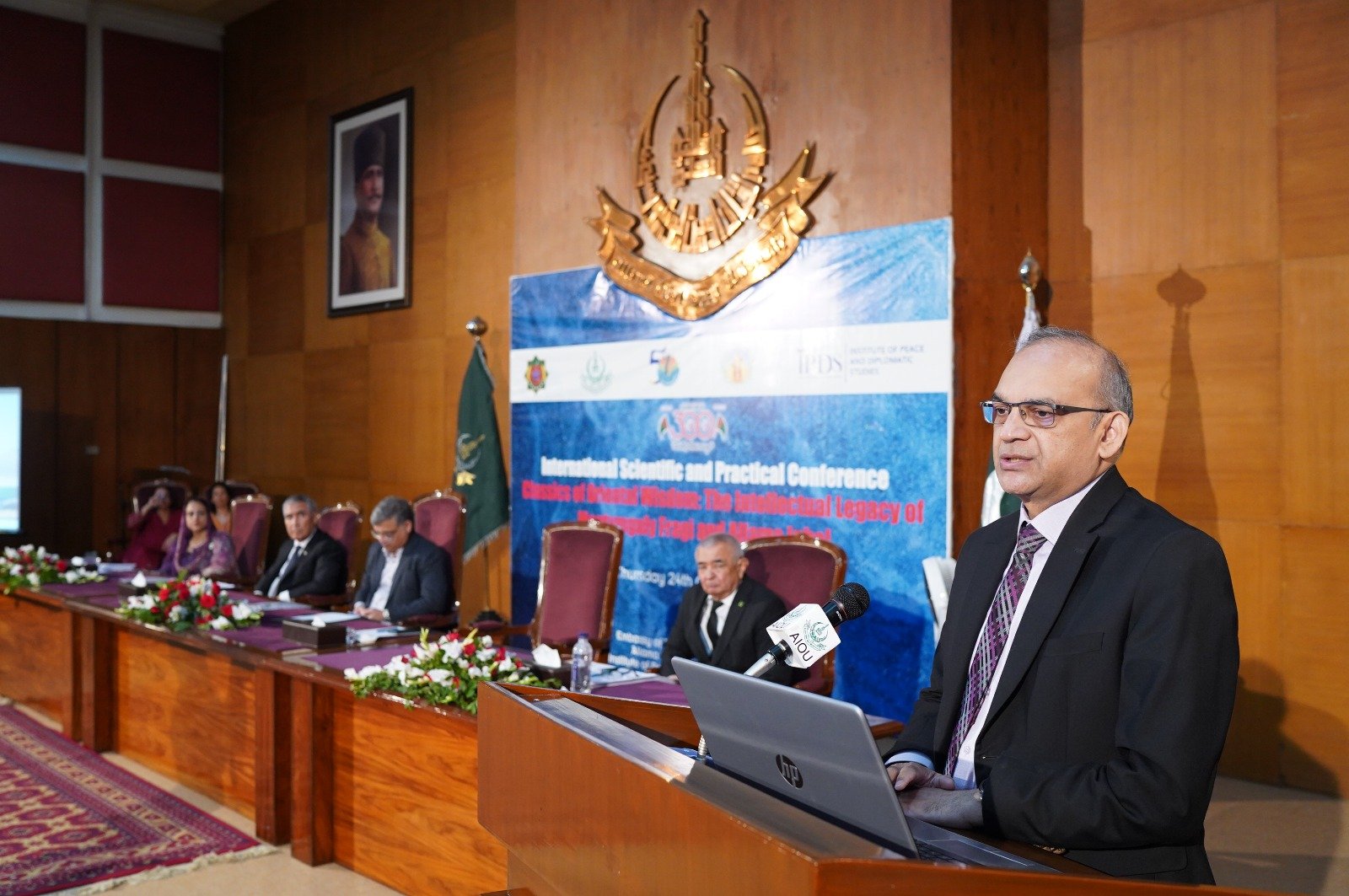
Magtymguly Corner, Allama Iqbal Open University, with the Embassy of Turkmenistan. Source →
Hafez Shirazi Corner, Allama Iqbal Open University, with the Embassy of Iran. Source →
The Nizami Ganjavi Corner, renovated, is reopened by the Ambassador of Azerbaijan. Source →
The Nizami Ganjavi Corner, opened in 2014, was renovated and reopened by the Ambassador of Azerbaijan in August 2026, twelve years on.
Evidence →Openings have drawn the Adviser to the Prime Minister on National History and Literary Heritage (2018) and the Federal Secretary for National Heritage and Culture (2024).
Evidence →With Tunisia, a 2017 talk on Ibn Khaldun led to a corner the following year; with Portugal, a 2015 visit by the Ambassador led to the Camões Corner in 2017.
Evidence →At AIOU the corners were placed in the university’s History Museum, designed by the calligrapher and artist Azeem Iqbal.
Evidence →The embassy brings the books and the guest of honour, the host institution provides space and care, and IPDS convenes, programmes and documents.
Each corner opens with a seminar, talk or conference, so it starts with an audience and press coverage.
Muhammad Asif Noor’s role as the National Book Foundation’s Book Ambassador gave IPDS a continuing relationship with the host, not a one-off booking.
Corners opened before 2013 through The Diplomatic Insight may be recorded only in print issues of the magazine; they will be added when a source is available.
Embassies, universities, think tanks and international organisations work with IPDS on research, dialogue, training and culture. Tell us what you have in mind.
Write to info@ipd.org.pk All case studies Partnerships in PracticeLast reviewed October 2026. Partners named in a case study can ask for corrections at info@ipd.org.pk.
Our latest analysis, upcoming events and calls for researchers, in your inbox twice a month.
New analysis from IPDS research centres, invitations to our dialogues and events, and opportunities for researchers. Twice a month, free, and you can leave with one click.