
Home About Us IPDS Team Advisory Board Partners Partnerships in Practice Partnership Case Studies Programs Research Fellowship — Apply International Young Diplomats School Emerging Young Women Leaders Congress International Certification Programs Islamabad Diplomacy Forum Research Live Trackers Expert Commentary Policy Analysis & Briefs Research Essays Journal of Peace and Diplomacy Books News & Updates Centres of Study Central Asia & Eurasia Women, Peace & Leadership Leadership Center SCO Studies BRI & China Studies European Studies American Studies Africa Studies ASEAN Studies Join the Scholars Network Events Register for an Event Career Support Engage with Us Commissioned Research Geopolitical Risk Analysis Media & Public Diplomacy Track II Dialogues Training & Executive Education Contact Us
Home/About IPDS/Partners/Case studies/Young women leaders
IPDS Partnership Case Studies · No. 5

Mentoring women leaders with partners from Germany, Australia and the region

The Emerging Young Women Leaders Congress pairs young women with senior women from politics, diplomacy, public service and media. Its three editions were each built with different partners. This case sets out what each partner contributed and what followed for the participants.

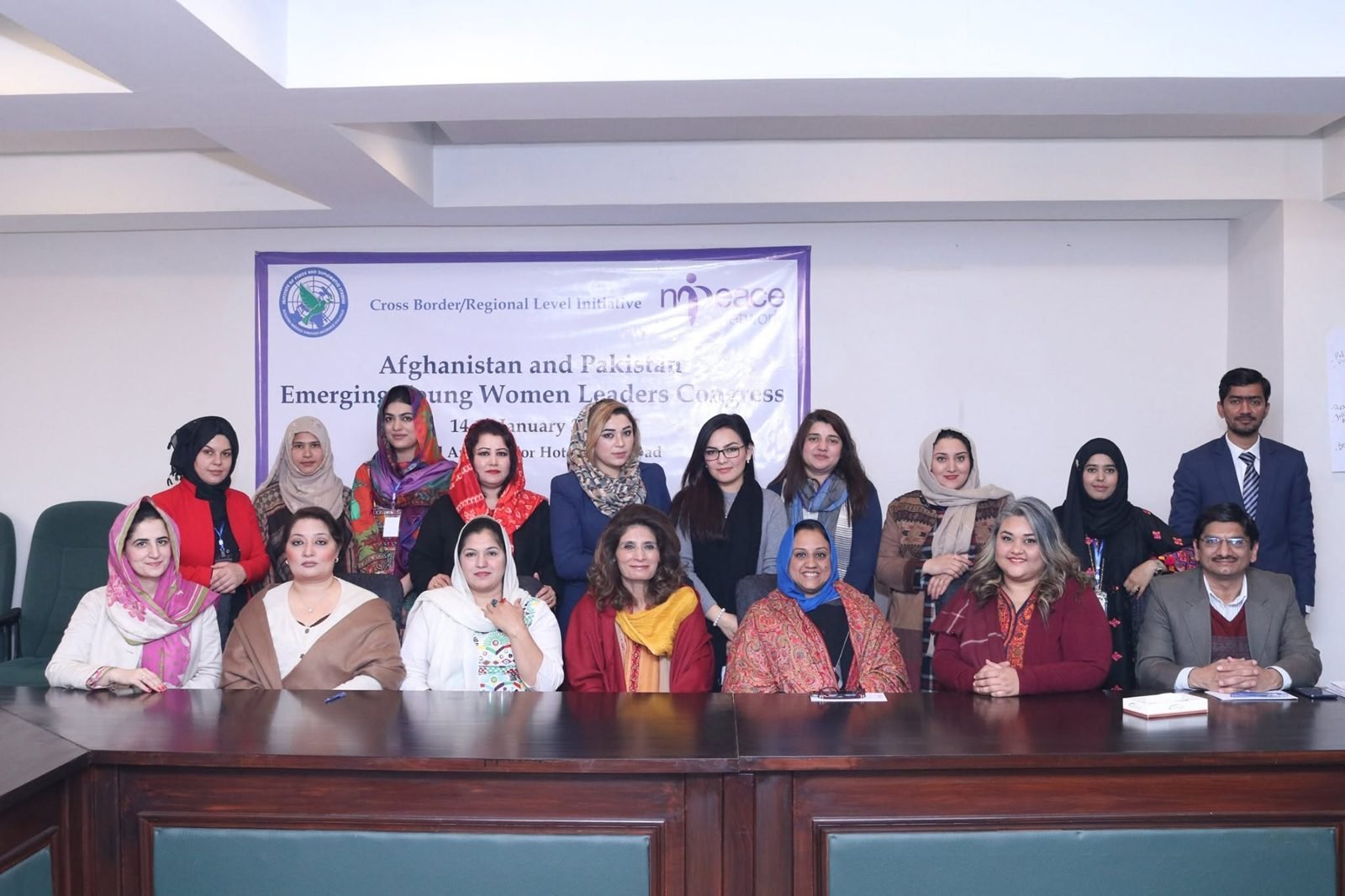
Afghanistan and Pakistan Emerging Young Women Leaders Congress, Islamabad, January 2019.
Period2015 to 2019; fourth Congress in preparation
TypeProgramme partnership
RegionPakistan, Afghanistan, Germany, Australia
StatusActive

01Context

Few young women in Pakistan have direct access to women already in senior roles. The Congress was designed to create that access: two days of closed mentoring workshops followed by a session open to the public.

No single organisation could fund and staff every edition. IPDS built each one with partners who brought what that edition needed: a co-organiser, a venue and network, a government programme, or regional reach.

02Partners and roles

Hanns Seidel Foundation, GermanyCo-organised the first Congress in 2015, including a public talk by Nobel Peace Laureate Tawakkol Karman.
Inter University Consortium for Promotion of Social Sciences; National Testing ServicePartners of the first Congress.
Australian Government, through its High CommissionCo-organised the second Congress in 2017.
The City SchoolCo-organised the second Congress.
Women’s Regional NetworkCo-host; presents the Congress through its Mentor Youth programme.
Benazir Income Support ProgrammeMade the 2017 cohort its Brand Ambassadors and received their project proposals.
N-Peace NetworkSupported the 2019 Afghanistan and Pakistan Congress.

03What was done

  1. 1–3 December 2015

    First Congress with the Hanns Seidel Foundation: 30 young women and 19 senior mentors; Tawakkol Karman is chief guest. Source →

  2. December 2015

    The foundation stone of IPDS’s Centre for Women, Peace and Leadership is signed at the Congress. Source →

  3. April 2017

    Second Congress with the Australian Government and The City School: 25 young women from seven regions; BISP names them Brand Ambassadors. Source →

  4. January 2019

    Afghanistan and Pakistan Congress, with the support of the N-Peace Network. Source →

  5. Next

    A fourth Congress is in preparation. Source →

04Outputs

3Congresses: 2015, 2017 and a cross-border edition in 2019
55Young women in the two national cohorts: 30 in 2015 and 25 in 2017
19Senior women mentors at the first Congress
4Projects the 2017 cohort designed for BISP’s women beneficiaries
1Centre founded at the Congress: Women, Peace and Leadership

05Results

Ideas taken up by a federal programme

In 2017 the Benazir Income Support Programme made the cohort its Brand Ambassadors, and four committees presented their projects at ministerial level.

Evidence →

Mentoring across party lines

In 2015 mentors from the Senate, the Women’s Parliamentary Caucus and several political parties worked with the same cohort.

Evidence →

A cohort across a border

In 2019 young women from Afghanistan and Pakistan met as one cohort.

Evidence →

Alumnae on the world stage

Alumnae have gone on to Chevening Awards, the UN human rights office’s Minorities Fellowship and N-Peace Award nominations.

Evidence →

An institution, not only an event

The Congress gave IPDS its Centre for Women, Peace and Leadership, which convenes the programme today.

Evidence →

06How the partnership works

A different partner mix for each edition

International co-organisers, an education partner, a regional network and a government programme each made a different edition possible.

Give participants something to deliver

The 2017 cohort did not only attend. It designed projects for a federal programme’s beneficiaries and presented them to a Minister.

Keep the alumni

Alumnae can register with IPDS and return as mentors, so each cohort widens the network for the next.

07Evidence and citation

  1. Emerging Young Women Leaders Congress (IPDS)
  2. “Women vital for peace, democracy, justice: Tawakkol Karman” (The Nation, 1 December 2015)
  3. Press release on the 2017 Congress (Press Information Department, Government of Pakistan)
  4. “Afghanistan, Pakistan join hands for women empowerment” (The Express Tribune, 16 January 2019)
  5. Mentor Youth (Women’s Regional Network)
  6. Photo archive of the Congress (Facebook)

Participant and mentor figures are taken from IPDS’s own Congress reports and its programme page.

Cite this case studyInstitute of Peace and Diplomatic Studies (2026). Mentoring women leaders with partners from Germany, Australia and the region. IPDS Partnership Case Studies, No. 5. Islamabad: IPDS. https://ipd.org.pk/about-us/partners/case-studies/young-women-leaders/ (last reviewed October 2026).

Build the next case study with IPDS

Embassies, universities, think tanks and international organisations work with IPDS on research, dialogue, training and culture. Tell us what you have in mind.

Write to info@ipd.org.pk All case studies Partnerships in Practice

Last reviewed October 2026. Partners named in a case study can ask for corrections at info@ipd.org.pk.

The IPDS Newsletter

Research, dialogues and opportunities from IPDS

Our latest analysis, upcoming events and calls for researchers, in your inbox twice a month.

We will email you to confirm. One click unsubscribes you at any time, and we never share your address. How we use your details.