Closing soon8th International Young Diplomats School — deadline extended: apply by 10 November. Three days with ambassadors in Islamabad, 8–10 December. Only 15 seats.Apply now →
A Democratic Congress and Pakistan: the President stays, Washington widens
Written by Dr. Farhat Asif
The midterms have not undone Washington’s turn back towards Islamabad. They have moved the working parts of the relationship. Pakistan now needs a congressional track as developed as its leader-to-leader one.
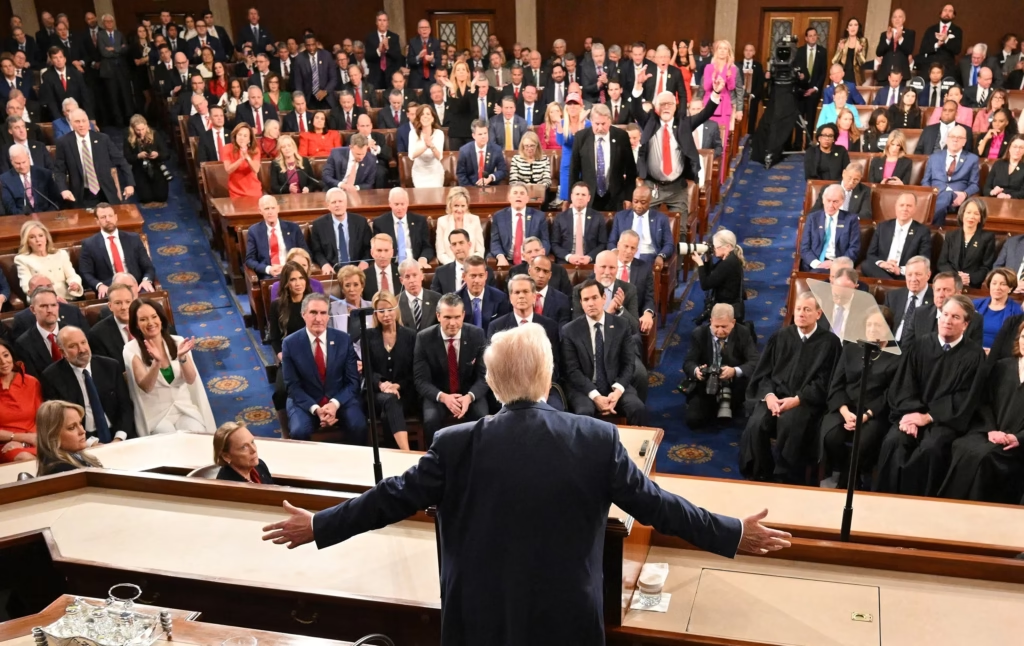
Americans voted on 3 November, and the result handed both chambers of Congress to the Democratic Party. By 6 November the shape of it was settled even as the counting went on. Democrats carried the House past the 218 seats that make a majority, and the Associated Press and the networks had called the Senate for them as well. The Diplomatic Insight’s own tally on the morning after the vote put the Democrats near 54 seats in the Senate, counting the two independents who sit with them, against the Republicans in the mid-forties, with a handful of races unresolved. One of those, Georgia, has since gone to a run-off on 1 December, so the exact size of the Democratic Senate will not be fixed for another month. The direction is not in doubt. Exit polling put the President’s approval at 38 per cent, with the economy named as the first worry. When the 120th Congress meets on 3 January 2027, Donald Trump will serve out his last two years with both houses against him.
For Islamabad the result lends itself to two easy conclusions, and both are wrong. One says nothing has changed, because American foreign policy is written in the White House. The other says much is now at risk, because a Democratic Congress will cool on a partnership that has become bound up with Mr Trump himself. A third reading fits the evidence better. The re-engagement of 2025 and 2026 rests on interests that both parties accept: counterterrorism cooperation, access to critical minerals, and Pakistan’s role as a mediator between Washington and Tehran. A change in the colour of Congress is unlikely to reverse that. What it changes is where the decisions are taken. Arms sales, aid budgets, any trade agreement, war-powers votes on Iran and public hearings all run through Congress, and from January every committee that touches them will have a Democrat in the chair.
The task is therefore diplomatic, not defensive. Since 2025 Pakistan’s access in Washington has run mostly through leaders and a thin layer of senior officials. That channel still matters more than any other, but it is no longer enough on its own. The work of the next two years is to build a second track, into the committees, their staff and the budget process, that can carry the relationship through oversight and spending cycles and, when the time comes, through a change of administration in 2029.
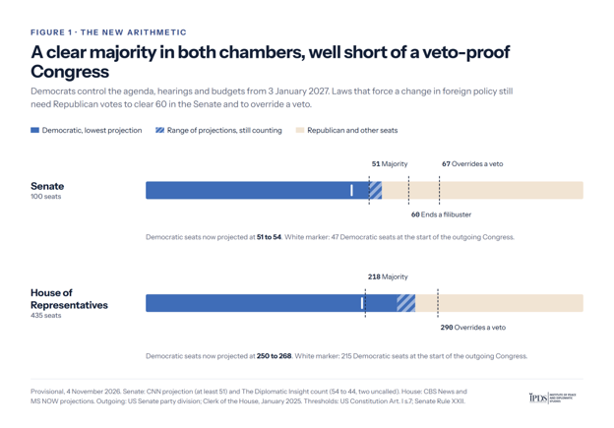
Figure 1: The new arithmetic: majorities, but well short of a veto-proof Congress
The President keeps the pen; Congress takes back the purse and the microphone
The size of the Democratic win is the first thing to be clear about, because it sets a limit on everything else. The majorities are real, but they are nowhere near large enough to let Congress overrule the President. Overriding a veto takes two-thirds of each chamber, 290 votes in the House and 67 in the Senate, and most Senate business needs sixty votes simply to come to a vote. Democrats have neither number, so any measure that tries to force the administration’s hand on foreign policy will need Republican votes to pass.
Analysts on both sides of the Atlantic said as much the morning after. Laurel Rapp of Chatham House told CNBC that the President still retains a great deal of latitude abroad. J.C. Lintzenich of the German Marshall Fund put it more plainly: the election changes the Congress, not the president.
That is the real case for the view that nothing changes, and it holds up to a point. It misses what Congress can do without a two-thirds majority. It controls the money, so a program that needs new funds needs both chambers to agree. It controls the calendar, so it decides which questions are asked in public and which officials are called to answer. And through the informal review of arms sales, the heads of the two foreign affairs committees can hold up a proposed sale before it is ever notified, a power the Congressional Research Service sets out in its guide to the process.
The Democratic leadership has said how it means to use all this. A Foreign Policy survey of the party’s priorities, out a week before the vote, placed the Iran war, Ukraine, NATO and anti-corruption oversight near the top. For Pakistan the change is one of method. What leaders settled between themselves in 2025 and 2026 will now also be gone over by committees, their staff and the people who write the budget.
The Pakistan files that now run through Capitol Hill
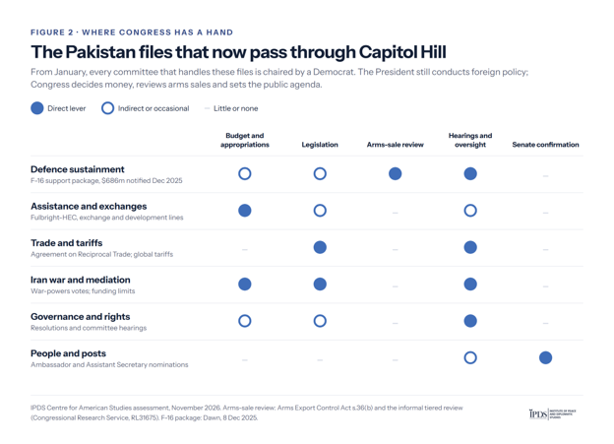
Most of the day-to-day business between the two countries touches Congress somewhere. The main files, set against the powers that bear on each, are shown in Figure 2.
Figure 2: Where Congress has a hand in the Pakistan files (IPDS assessment
Defence sustainment. On 8 December 2025 the United States notified Congress of a possible $686 million package to sustain and upgrade Pakistan’s F-16 fleet. Sales like this are reviewed under section 36(b) of the Arms Export Control Act. Blocking one formally takes a joint resolution the President can veto, which is why it almost never happens. The informal stage counts for more. Future cases will be examined by Democratic chairs who are within their rights to ask hard questions about end use and the regional balance. A file that is well documented, prepared early and walked through committee staff before notification is the one most likely to keep moving.
Assistance and the budget. Civilian aid to Pakistan is a shadow of what it was a decade ago, but the yearly State and foreign operations bill still sets the terms for what remains, including exchange programmes and any conditions Congress attaches. The Fulbright partnership with the HEC, renewed for five years in August 2026, depends on exchange money on the American side. Education and exchanges have drawn support from both parties for years, a thread of continuity Islamabad can build on.
Trade. Talks on a bilateral Agreement on Reciprocal Trade had, in the words of Pakistan’s Commerce Secretary on 20 October, made substantial progress, with a few technical points still to settle with the US Trade Representative’s office. The trade itself is not small. American goods trade with Pakistan came to about $8.5 billion in 2025, with $5.4 billion of that in US imports from Pakistan, according to the US Census Bureau. An executive agreement does not need a vote in Congress to be signed, but it will be read closely by the Ways and Means and Senate Finance committees, both of which pass to Democratic chairs in January.
Iran. Democrats have promised war-powers votes on the conflict with Iran and may use the spending power to limit it. This is the file where congressional action and Pakistan’s own diplomacy meet most directly, and it is taken up on its own below.
Oversight and hearings. Congress speaks about Pakistan’s internal affairs when it chooses to. In June 2024 the House passed H.Res. 901, on Pakistan’s February 2024 elections, by 368 votes to 7. Pakistan’s Foreign Office said at the time that the resolution did not reflect a full grasp of the situation on the ground. That happened under a Republican House, a reminder that such resolutions are not the work of one party. A Democratic majority in charge of the hearing calendar may come back to questions of governance and rights more often. The answer is steady, factual engagement with the committees, not a public argument after the fact.
Nominations. The Senate confirms ambassadors and senior State Department officials. Any future nominee for the embassy in Islamabad, or for the Assistant Secretary who covers South and Central Asia, goes through a Senate Foreign Relations Committee that a Democrat will chair.
Iran is where Congress and Pakistan’s mediation meet
This is the file with the most to offer Pakistan. The war with Iran, which opened with American and Israeli strikes on 28 February 2026, ran through the whole campaign. Mr Trump said during the campaign that the war would end after the midterms and that fuel prices would fall, remarks reported by CBS News. Democrats have promised war-powers votes in both chambers and may use the budget to choke off new money.
Pakistan already holds the most developed line between Washington and Tehran. It brokered the ceasefire of 8 April 2026, hosted the Islamabad talks, the highest direct contact between the two sides since 1979, and helped produce the fourteen-point Islamabad Memorandum of Understanding in June. On 29 May the US Secretary of State acknowledged that mediation in his meeting with Deputy Prime Minister and Foreign Minister Ishaq Dar. The sixty-day window for follow-up talks lapsed in August, however, and nothing has been announced since.
Put the two facts together and the point almost makes itself. A Democratic Congress cannot end the war, but it can raise the price of continuing it. Every war-powers vote, every hearing on fuel prices, every limit on new funding adds to the administration’s reason to look for a negotiated way out. A negotiated exit needs a channel, and the channel that already exists runs through Islamabad. The likely effect of congressional pressure through 2027 is to raise, not lower, the value Washington places on Pakistan’s role as broker. That value does not belong to one party. A Democratic majority that wants the war wound down has as much use for a working channel as a Republican White House that wants a deal on its own terms.
Two cautions apply. Tehran has made clear that it does not expect American policy to shift with the make-up of Congress; Supreme Leader Mojtaba Khamenei said that anyone who thought a partisan change would alter Washington’s course was gravely mistaken, while the parliament speaker, Mohammad Bagher Ghalibaf, read the vote as a rejection of war. And mediation earns credit only while both sides see it as fair. Pakistan’s standing on this file rests on remaining a facilitator that Washington, Tehran and the Gulf capitals can all accept, and on not being tied to either side in American politics.
Tariff politics cut both ways for Pakistani exporters
Trade is the file where the result’s effect is least obvious. The legal ground has already moved once this year. The 19 per cent reciprocal tariff placed on Pakistani goods in July 2025 was issued under emergency-powers authority, and that authority fell away when the US Supreme Court ruled on 20 February 2026 that the statute does not allow tariffs. Measures under other laws have applied since. House Democrats have said some of their first bills in the majority will aim to scrap the remaining global tariffs and rein in the President’s trade powers, though those bills would need Republican votes in the Senate and could still draw a veto.
The point for Pakistan is that a trade agreement is worth as much as the wall around it. Pakistani exporters, above all in textiles and apparel, gain from any general fall in American tariffs, and the United States is still Pakistan’s largest single-country export market. But a bilateral deal is worth most when it buys better terms than competitors get. If Congress lowers the general wall, the edge a bilateral deal gives narrows, while its value as a guarantee of steady access rises. After January the agreement’s main benefit is likely to be predictability and investor confidence rather than a wide tariff margin over rivals. That argues for closing it on terms that will be easy to defend before a Democratic Ways and Means Committee, with clear provisions on labour standards and market access of the kind both parties have supported before.
The new committee map rewards long relationships over single channels
The committees that matter most to Pakistan are changing hands, and in at least one case the lead Democrat is changing too. In the House, Gregory Meeks, the senior Democrat on Foreign Affairs and its chairman from 2021 to 2023, is widely expected back in the chair. Adam Smith, the senior Democrat on Armed Services, is the likely chair there.
In the Senate, the senior Democrat on Foreign Relations, Jeanne Shaheen, did not stand again, so that committee will have a new Democratic chair in January, and as of early November the choice had not been announced.
Pakistan does not start from nothing here. The Congressional Pakistan Caucus is bipartisan, co-chaired by Tom Suozzi, a New York Democrat, and Jack Bergman, a Michigan Republican, who together held the first Pakistan Caucus policy symposium at the Capitol in March 2026. Delegations have kept coming; in July 2026 a group that included Representatives Ryan Zinke and Michael Baumgartner was in Islamabad for talks on trade, education and investment. The Pakistani-American community, about 680,000 people by the Pew Research Center’s reading of 2023 census data, has members in both parties and gives Pakistan a constituency of its own in many districts. The new Senate will also seat its first Muslim member, Abdul El-Sayed of Michigan.
Some analysts expect a Democratic Congress to tilt towards India. Imran Khan, a former Pakistan country director at the United States Institute of Peace, told Al Jazeera before the vote that a Democratic Congress would lean more towards India than Pakistan. The caution is fair, but it is not a rule. Congressional feeling about South Asia has usually followed specific issues, counterterrorism results, nuclear safety, trade, rights and the diaspora, more than party labels. The best guard against a cooler Congress is a record of delivery on the issues Democratic members already care about.
How the world read the result, and how Islamabad’s reading should run
Most governments met the result with restraint and a stress on continuity. China’s Foreign Ministry called the vote an American domestic affair. A British minister called the relationship with Washington unwavering and unchanging, and France’s finance minister said Paris would wait to see whether the President changed his approach. A European Parliament vice-president, Christel Schaldemose, said she was cautiously optimistic about support for Ukraine while insisting the EU must stand on its own feet.
Pakistan had not put out a statement by the evening of 4 November. Its standing position is clear and sensible. In 2020 the Foreign Office called the US election an internal matter and said Pakistan would work with whoever won. On 23 October 2026 the Foreign Office spokesperson said Islamabad remained committed to stronger diplomatic, economic and security ties with Washington. That language fits the moment. The relationship is between two states, and both American parties have a stake in it.
The comparison with other partners shows where Pakistan’s message could do more. Countries whose ties to Washington are broad and institutional, Britain and Japan among them, could speak of continuity because their relationships run through many channels at once. Pakistan’s recent gains were won at the top and at speed. The next step is to give them the same depth, so that a change of committee chairs, or of administrations in 2029, does not undo them.
What to watch, and what would change this assessment
The argument of this brief is simple: the re-engagement holds while the venue widens. A few things over the coming months will test it.
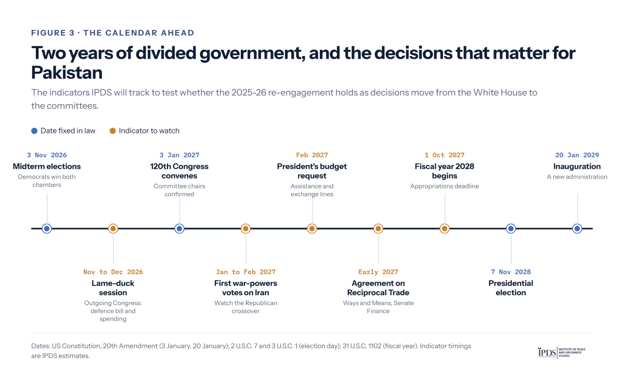
Figure 3: The calendar ahead: from the lame-duck session to the 2028 election
The lame-duck session, November to December 2026. Whether the outgoing Congress finishes the annual defence authorisation and the outstanding spending bills, or leaves them to the new majorities. Anything left to January will be written by Democratic appropriators.
The Georgia run-off, 1 December 2026. The seat settles the final size of the Democratic Senate and, with it, how much room the majority has on close votes.
3 January 2027, when the 120th Congress convenes. The final seat counts, and the confirmed chairs of Senate Foreign Relations, House Foreign Affairs and the two Armed Services committees. A chair who speaks often on South Asia would make early engagement more urgent.
January to February 2027, the first war-powers votes on Iran. The margin, and above all the number of Republicans crossing over, will show how much pressure the administration is under to find a way out. A rising margin would support the view that Pakistan’s channel is gaining value.
Early 2027, the Agreement on Reciprocal Trade. Whether it is signed before the new committees are seated, and how Ways and Means and Senate Finance treat it. Signature with a welcome from both sides would bear the argument out; open opposition from Democratic trade leaders would weaken it.
February 2027, the President’s budget request. The figures proposed for South and Central Asia assistance and for exchange programmes, and the conditions appropriators later attach.
Through 2027, committee hearings that mention Pakistan. Their number and tone in the foreign affairs committees and their subcommittees. Regular, issue-based hearings with Pakistani engagement would point to a maturing relationship; a run of hearings about governance alone would mark a cooling.
What would prove the argument wrong? A sustained congressional campaign that freezes defence cooperation, or ties trade terms to Pakistan’s domestic politics, set alongside a White House that has lost interest, would mean the re-engagement was personal rather than institutional. That looks unlikely in 2027, but it becomes likelier the longer the relationship rests on a single channel. The surest protection is for Islamabad to work both parties, committee staff as well as principals, and the Pakistani-American community, so that in Washington the relationship is understood as an American national interest and not the preference of any one administration.
Our latest analysis, upcoming events and calls for researchers, in your inbox twice a month.
The IPDS Newsletter
Stay informed on diplomacy and global affairs
New analysis from IPDS research centres, invitations to our dialogues and events, and opportunities for researchers. Twice a month, free, and you can leave with one click.