Abstract
United Nations (UN) peace operations have evolved from traditional ceasefire monitoring into multidimensional interventions involving civilian protection, political mediation, humanitarian coordination, governance support, security sector reform, and peacebuilding. The 2000 Report of the Panel on United Nations Peace Operations, commonly known as the Brahimi Report, was central to this transformation, calling for credible mandates, rapid deployment, integrated mission planning, stronger civilian protection, and greater political commitment. The phrase “there must be a peace to keep” is often used as a shorthand for its warning that peacekeeping cannot substitute for political settlement. More than two decades later, MONUSCO has confronted persistent violence, including the M23 capture of Goma and Bukavu in 2025, while the mission itself has undergone a difficult withdrawal and reconfiguration. This article reassesses Brahimi alongside the 2015 High-level Independent Panel on Peace Operations (HIPPO) and the 2018 Action for Peacekeeping (A4P) initiative. It argues that Brahimi remains foundational, but contemporary missions require greater adaptation to conflicts in which peace is incomplete. It therefore proposes an Adaptive Peace Support Operations Framework centred on political engagement, security, institutional resilience, societal ownership, and technological capability.
Keywords: United Nations, Peace Operations, Peacekeeping, Brahimi Report, MONUSCO, Democratic Republic of Congo, Peacebuilding, Conflict Transformation
Introduction
United Nations peacekeeping has never been a static institution. The first generation of operations emerged during the Cold War as relatively limited mechanisms for monitoring ceasefires and separating parties to interstate conflicts. Their operation was premised on conditions that were comparatively clear: identifiable parties, negotiated ceasefires, functioning state authority, and a political commitment to maintain peace. The end of the Cold War increasingly undermined these conditions. Intrastate conflict, state fragility, insurgency, organized crime, and humanitarian emergencies increasingly required missions to perform political, security, humanitarian, and institutional functions simultaneously. This evolution is reflected in major peacekeeping studies such as Williams and Bellamy’s Understanding Peacekeeping, Paris’s At War’s End, Diehl’s International Peacekeeping, and Doyle and Sambanis’s Making War and Building Peace.
The crises and failures associated with United Nations missions in Somalia, Rwanda, and Bosnia exposed the limitations of existing doctrine. These failures are widely discussed in works such as Dallaire’s Shake Hands with the Devil, Power’s A Problem from Hell, and Howard’s Power in Peacekeeping. The 2000 Brahimi Report was a major institutional response. It argued for clear and achievable mandates, stronger political commitment, rapid deployment, integrated planning, improved logistics and intelligence, and stronger civilian protection. Its recommendations helped shape the multidimensional peace operations that followed.
Read More: UN Women’s 2026 Gender Snapshot: Progress on Women’s Political Leadership Is Stalling
Yet the security environment has continued to change. Contemporary conflicts frequently involve fragmented armed groups, criminal economies, regional involvement, and weak or contested state authority, a pattern analysed in Kaldor’s New and Old Wars and Karlsrud’s The UN at War. The 2015 HIPPO report explicitly warned that changes in conflict were outpacing the ability of UN peace operations to respond and called for the primacy of politics, people-centred operations, stronger partnerships and better alignment between mandates and resources. The 2018 Action for Peacekeeping (A4P) initiative reinforced these priorities through commitments on politics, protection, performance, peacebuilding, partnerships and accountability. The UN Secretary-General’s A New Agenda for Peace similarly identifies persistent violence, geopolitical fragmentation, technological disruption, transnational threats and declining trust in multilateral institutions as features of the current international environment.
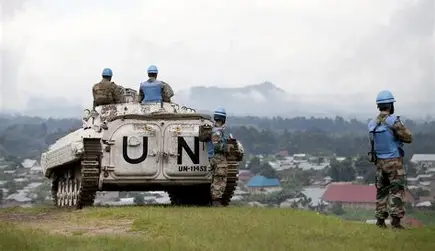
MONUSCO provides a useful lens through which to examine this tension. Established in 2010 as the successor to MONUC under Security Council Resolution 1925, the mission has operated amid recurring violence involving M23, the Allied Democratic Forces (ADF), local armed groups and broader regional dynamics. Its experience raises a question that goes beyond whether MONUSCO has succeeded or failed: does the doctrine developed in response to the conflicts of the 1990s remain adequate for missions operating in conflicts where peace is incomplete?
This article argues that the Brahimi Report remains foundational, but its operational assumptions require reinterpretation. Contemporary peace operations increasingly operate where peace is incomplete rather than simply preserving an established settlement. They operate within fragile political environments in which security, mediation, institution building, and peacebuilding occur simultaneously. The appropriate response is therefore not to abandon Brahimi, but to extend its logic of institutional learning through a more adaptive model of peace support operations.
Read More: UN Backs New World Map to Correct Africa’s Size, US Casts Lone Dissent
Methodology and Analytical Approach
The article adopts a qualitative case study design based on documentary analysis of United Nations reports, Security Council resolutions, and scholarly literature on peacekeeping, peacebuilding, conflict transformation and MONUSCO. The analysis focuses on how Brahimi’s principles of mandate clarity, political commitment, civilian protection and institutional coordination have been reflected, adapted, or challenged in the MONUSCO context. MONUSCO is selected because it combines persistent armed violence, fragmented authority, civilian protection demands, regional involvement and an incomplete political settlement.
The analysis draws conceptually on Liberal Institutionalism and Conflict Transformation Theory. Liberal Institutionalism, associated here with Keohane’s After Hegemony, explains how international institutions respond to operational failure through learning, cooperation and reform. Conflict Transformation Theory, reflected in Lederach’s Building Peace, highlights why formal settlements do not necessarily remove the structural, political and social conditions that reproduce violence. Together, the perspectives illuminate the tension between institutional adaptation and evolving conflict environments.
From Traditional Peacekeeping to Multidimensional Operations
Traditional UN peacekeeping was largely designed around interstate conflict and limited objectives. Consent of the parties, impartiality and the non-use of force except in self-defence and defence of the mandate provided the principal operating principles. Missions were generally deployed after a ceasefire or political agreement and were expected to monitor rather than create peace.
The post-Cold War period altered this model. Peace operations increasingly addressed conflicts involving weak institutions, non-state armed groups and humanitarian crises. Their mandates expanded to include civilian protection, electoral assistance, disarmament, demobilisation and reintegration, security sector reform, governance support and peacebuilding. Peacekeeping therefore became multidimensional.
Read More: The United Nations: an agreement that reached students
The Brahimi Report consolidated this transformation. Its importance was not simply that it proposed more resources for peacekeepers. It treated peace operations as integrated institutional systems in which political authority, mandate design, military capability, logistics, intelligence, financing and strategic planning had to work together. It also rejected the idea that impartiality required passivity in the face of systematic violence.
A frequently repeated shorthand for the report’s position is that “there must be a peace to keep.” The phrase does not appear verbatim in the Brahimi Report. Rather, the report’s discussion of consent, impartiality, the use of force and realistic mandates emphasises that peacekeeping cannot substitute for a political settlement and that missions require a viable political basis for their work. This distinction matters because the phrase has acquired a doctrinal status that the original text itself does not claim. The underlying lesson remains important: military deployment cannot resolve political conflicts by itself.
The difficulty is that many contemporary missions no longer fit the environment associated with conventional peacekeeping. MONUSCO illustrates this shift. The mission has had to protect civilians, support political processes, engage armed groups and operate alongside regional initiatives while violence persists. The establishment of the Force Intervention Brigade in 2013 was particularly significant because Security Council Resolution 2098 authorised offensive operations against designated armed groups. This complicated the traditional distinction between peacekeeping and peace enforcement and demonstrated how missions were being adapted to environments in which conventional peacekeeping was insufficient.
MONUSCO and the Changing Conditions of Peacekeeping
MONUSCO demonstrates both the continuing value and the limitations of the Brahimi framework. Many of its institutional features reflect Brahimi’s recommendations. The mission brings together military, police, political, human rights, and civilian protection capabilities. Civilian protection is central to its mandate. Its operational challenges also confirm the later HIPPO and A4P emphasis on matching mandates with political strategies, capabilities, partnerships and resources.
At the same time, MONUSCO operates in an environment in which the conditions for conventional peacekeeping remain weak. The mission ceased operations in South Kivu in April 2024 and completed its withdrawal from the province by the end of June, following the DRC Government’s request and Security Council Resolution 2717. The withdrawal was intended to be gradual and responsible, but subsequent developments exposed the risks of disengagement amid unresolved insecurity. According to the 2025 MONUSCO report, M23 captured Goma on 27 January 2025 and Bukavu on 16 February, while restrictions on MONUSCO’s movement and access constrained its ability to operate in areas under M23 control. By late 2025, MONUSCO was authorised for 11,500 troops and 600 military observers and staff officers, but its deployed strength had fallen to 9,281 troops and 432 military experts, with further reductions planned. The mission therefore faced a simultaneous problem of persistent protection demands, shrinking operational space and declining capacity. This means it cannot simply supervise an agreed peace. It must manage insecurity while supporting efforts to create a political environment in which peace can become sustainable.
Judging MONUSCO only by whether it has ended violence risks attributing to a peace operation responsibilities beyond its institutional capacity. Conversely, judging it only by whether it has implemented its mandate can obscure whether the mandate itself reflects the conflict environment. Both dimensions therefore matter.
The mission also exposes the limits of treating peacekeeping, peacemaking, peacebuilding and peace enforcement as separate stages. In eastern DRC, civilian protection, military stabilisation, political mediation, humanitarian assistance, institution building and community engagement can occur at the same time. A mission cannot always wait for violence to end before beginning peacebuilding, nor can political engagement be postponed until security is fully established. Contemporary peace operations therefore operate across overlapping phases of the conflict cycle.
Reassessing the Brahimi Report
What MONUSCO reveals is not simply that peacekeeping has become more difficult, but that the meaning of mission effectiveness has changed. A mission operating in a fragmented conflict cannot be evaluated only by whether it eliminates armed groups or produces an immediate absence of violence. It must also be assessed by whether it reduces threats to civilians, expands political space, strengthens institutions and supports processes through which local and national actors can manage conflict without renewed violence. This is consistent with HIPPO’s emphasis on the primacy of politics and people-centred peace operations and with A4P’s call for focused mandates, stronger protection and measurable performance. These principles do not lower the standard for peace operations. They change the indicators through which their contribution should be understood. HIPPO (2015) and A4P (2018) provide the relevant institutional context.
The experience of the Force Intervention Brigade is especially instructive. Its authorisation reflected a recognition that the traditional separation between peacekeeping and peace enforcement had become difficult to sustain in eastern DRC. Yet coercive capacity did not remove the political and structural conditions that sustained conflict. This illustrates a broader lesson for contemporary missions: military adaptation can address immediate threats, but it cannot substitute for political settlement, governance reform or local conflict transformation. The appropriate institutional response is therefore not a choice between robust security operations and political engagement. Effective peace support requires their integration.
This also has implications for mission exit. Withdrawal should not be understood simply as the termination of an international deployment. If institutions capable of sustaining peace remain weak, a formally completed mission may leave unresolved vulnerabilities. An adaptive approach should connect mandate design, performance assessment and transition planning from the beginning. The objective should therefore be to strengthen national and regional capacities to manage conflict and insecurity after international support declines.
The DRC case also reinforces the importance of local ownership. International actors often operate through national political institutions, yet many sources of insecurity are experienced at community level. Local disputes over land, identity, customary authority, access to resources and security can continue even when national peace agreements are in place, as shown in Autesserre’s The Trouble with the Congo, Stearns’s From CNDP to M23, and Mac Ginty’s International Peacebuilding and Local Resistance. A peace operation that concentrates on elite negotiations without sufficient attention to these dynamics may contribute to political stability without producing social peace. This is why the societal dimension of the proposed framework is not an additional component but part of the operational logic of sustainable peace.
The evidence does not support treating Brahimi as obsolete. Several of its principles remain central to effective peace operations. Clear mandates, realistic objectives, political commitment, integrated planning, rapid deployment, civilian protection and adequate resources remain necessary. HIPPO and A4P did not discard these foundations; they extended them by placing greater emphasis on political strategies, local populations, partnerships, performance and adaptation. The problem is therefore not that Brahimi has become irrelevant. Rather, contemporary missions demonstrate that its principles are insufficient when applied without adaptation to conflicts in which peace remains incomplete.
The proposition commonly summarised as “there must be a peace to keep” is therefore best understood as a warning against substituting military intervention for political settlement, not as a literal sentence from Brahimi. Contemporary practice also suggests that peace should not be understood as a binary condition in which it either exists or does not. In many conflict environments, peace exists unevenly. Some communities may experience relative stability, while others remain exposed to armed violence. A national political agreement may coexist with unresolved local disputes. Institutions may function in some areas while state authority is weak in others.
The more useful question for contemporary peace operations is therefore not simply whether there is a peace to keep, but what kind of peace exists, for whom it exists, and what political and institutional space exists to expand and consolidate it. The Brahimi proposition can consequently be reformulated: there must be sufficient political space to build peace, even where comprehensive peace has not yet been achieved.
This reinterpretation preserves the central insight of Brahimi while recognising contemporary conflict. It also brings the argument closer to HIPPO and A4P, both of which place political solutions, protection, partnerships and sustaining peace at the centre of effective peace operations. Conflict Transformation Theory similarly treats peace as an ongoing process involving relationships, institutions and structures rather than an endpoint created by an agreement.
The experience of MONUSCO also suggests that political engagement should remain the organising principle of future peace operations. Military capabilities remain essential for civilian protection and deterrence, but sustainable peace depends on political processes, governance and institutions. Regional organisations can contribute political relationships and contextual knowledge, while technology can improve early warning and civilian protection without replacing political judgement or local engagement.
Read More: International Day of Multilateralism and Diplomacy for Peace
An Adaptive Peace Support Operations Framework
The changing nature of conflict requires peace operations to function as adaptive systems rather than fixed deployments executing static mandates, while remaining anchored in clear political objectives and international law. Building on the Brahimi Report, the MONUSCO experience and the literature on adaptive peace operations, especially de Coning’s “Adaptive Peace Operations”, this article proposes an Adaptive Peace Support Operations Framework comprising five interconnected dimensions.
The political dimension requires continuous dialogue, mediation, confidence building and inclusive governance. Missions should adjust political strategies as relationships, negotiations and conflict dynamics change. Political engagement should operate alongside security functions from the outset.
The security dimension requires flexible force structures, rapid mobility, intelligence-led deployment and civilian protection. Missions operating against fragmented armed groups cannot rely primarily on static approaches designed for ceasefire monitoring. Security capabilities must be capable of responding to changing patterns of violence while remaining consistent with international law and the mission mandate.
The institutional resilience dimension focuses on the capacity of national institutions to sustain peace after mission withdrawal. Judicial systems, policing, public administration, electoral institutions and local governance should be treated as components of peace sustainability. Mission performance should therefore be assessed not only through immediate reductions in violence, but also through the extent to which supported institutions become capable of managing disputes without renewed armed conflict.
The societal ownership dimension places local ownership and social legitimacy at the centre of peacebuilding. Reconciliation, community resilience, gender inclusion and meaningful youth participation influence whether externally supported political settlements acquire social legitimacy and become socially sustainable. The experience of the DRC demonstrates the danger of focusing primarily on elite-level agreements while local disputes over land, identity, authority and security remain unresolved.
Read More: AU’s 5th Continental Dialogue Spotlights Gaps in Youth, Peace and Security Implementation
The technological capacity dimension recognises that peace operations increasingly operate in information-rich environments. Satellite imagery, unmanned systems, digital early warning, geospatial intelligence and predictive analytics can strengthen civilian protection and operational planning. The value of these tools depends on institutional capacity, ethical safeguards and human judgement. Technology should improve understanding and response, not substitute for political engagement. A4P commitments emphasise technology, safety and performance, while the UN peacekeeping digital transformation strategy provides the missing technology reference by linking digital tools, situational awareness and data-informed decision-making to more effective peacekeeping.
The five dimensions are interdependent. Security without political engagement can contain violence without transforming its underlying conditions. Political agreements without institutional capacity can remain fragile. Institution building without societal ownership can produce structures with limited legitimacy. Technology without political and ethical safeguards can improve information collection without improving peace outcomes. The framework is therefore an integrated system, not a menu of separate reforms.
Adaptation should not be confused with open-ended mandate expansion; it should adjust means and priorities to changing conflict conditions while preserving clear political objectives, legal authority and accountability.
Implications for Future UN Peace Operations
The experience of MONUSCO points to several implications for UN peace operations doctrine. First, mandates should incorporate mechanisms for periodic strategic review, allowing priorities to adjust as conflict dynamics change. Second, the Security Council should align mandates with available resources and achievable political objectives. Ambitious mandates unsupported by mobility, intelligence, logistics, financing or political backing can weaken mission effectiveness and public confidence. Third, UN peace operations should deepen structured partnerships with the African Union and subregional organisations, moving beyond ad hoc coordination toward joint strategic planning and clearer divisions of responsibility. Fourth, member states should invest in capabilities suited to multidimensional operations, including mediation, civilian protection, intelligence analysis, community engagement and responsible use of digital technologies. Fifth, future doctrine should recognise that peace operations increasingly function within continuous political transitions rather than clearly bounded post-conflict environments.
Read More: The Afghan Peace Process in Transition Assessing the Biden Administration’s Approach
Conclusion
The Brahimi Report remains a major foundation of modern UN peace operations. Its emphasis on credible mandates, political commitment, integrated planning, civilian protection and institutional coordination remains relevant. HIPPO and A4P subsequently reinforced the primacy of politics, people-centred protection, partnerships, performance and sustaining peace. What has changed is the environment in which these principles are applied.
MONUSCO demonstrates the problem with particular clarity. The mission withdrew from South Kivu in 2024 as part of a negotiated disengagement, yet M23’s capture of Goma and Bukavu in 2025 showed how quickly security conditions could deteriorate. At the same time, the Peace Agreement between the DRC and Rwanda signed in Washington on 27 June 2025, the Doha Framework for a Comprehensive Peace Agreement of 15 November 2025, the Washington Accords for Peace and Prosperity of 4 December 2025, and Security Council Resolution 2808 of 19 December 2025, which renewed MONUSCO’s mandate through 20 December 2026, created a renewed political track while MONUSCO continued to operate under severe constraints. The coexistence of military escalation, mission reconfiguration and renewed diplomacy demonstrates that contemporary peace operations may have to protect civilians and support political processes in the same conflict environment, rather than move through neatly separated stages.
The enduring lesson of Brahimi is therefore not that peace operations require a completed peace before they can begin. It is that peace operations must be anchored in political purpose, realistic mandates and institutional capacity. The next phase of UN peace operations should extend that lesson through adaptive operations that are politically responsive, operationally flexible, institutionally grounded, socially legitimate, regionally connected and technologically informed. The question is no longer simply whether there is a peace to keep. It is whether peace operations can create and protect sufficient political space for peace to take root.
Oluwafemi John Adebayo
Oluwafemi John Adebayo is a governance and democracy researcher and Head of Research and Programs at Kimpact Development Initiative (KDI), Nigeria. His work focuses on democratic governance, electoral integrity, electoral security, civic participation, public policy, and conflict-sensitive approaches to democratic development. He leads and contributes to research and policy initiatives examining elections, political institutions, citizen engagement, electoral violence, and democratic accountability in Nigeria. His professional experience includes research, programme strategy, policy analysis, stakeholder engagement, and the development of evidence-based interventions for democratic strengthening. He is also pursuing postgraduate studies in Peace and Conflict Resolution, with research interests spanning peacebuilding, political conflict, electoral processes, and institutional resilience.