A Turning Point Without Treaty Limits
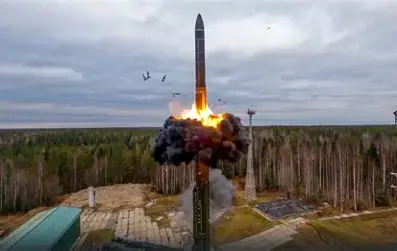
The expiration of the New Strategic Arms Reduction Treaty (New START) in February 2026 marked a turning point in nuclear diplomacy. For the first time in more than half a century, the United States and Russia have no legally binding treaty limiting their strategic nuclear arsenals. The moment has taken on added significance since US President Donald Trump said on 15 October that Washington was discussing denuclearization with Moscow and Beijing.
Those remarks, reported by Reuters on 16 October, have revived a question that nuclear diplomacy has long struggled to answer: can a system built to manage competition between two superpowers adapt to a world in which China is an increasingly consequential nuclear actor? The challenge is not simply to bring three governments to the negotiating table. It is to establish restraints that reflect their different capabilities, strategic interests and perceptions of security.
What the Treaty Provided, and What Its Loss Means
New START, signed in 2010 and in force from 2011, capped each country’s deployed strategic warheads at 1,550 and its deployed strategic delivery vehicles at 700, and set up verification and information-sharing arrangements. Its importance went beyond the numbers. By allowing each side to monitor the other’s strategic forces, the treaty reduced uncertainty about capabilities and intentions. In practice, however, verification had already broken down before the treaty expired: on-site inspections were paused in 2020 and never resumed, and Russia suspended its participation in 2023. What ended in February 2026 was therefore the legal framework rather than a working inspection regime. Even so, its expiration has removed a significant source of predictability between Washington and Moscow at a time of heightened geopolitical tension.
In his statement marking the treaty’s expiration on 5 February 2026, UN Secretary-General António Guterres warned of the dangers of a world without binding limits on the two largest nuclear arsenals. The immediate concern is not that either country must increase its deployments, but that both now have greater freedom to do so. In an atmosphere of mistrust, that uncertainty can encourage worst-case planning and make restraint harder to sustain. Russia has said it will keep to the treaty’s central limits only as long as the United States does, which makes restraint conditional on reciprocity.
China, Russia and the Negotiating Problem
The growing importance of China complicates the search for a successor framework. According to the Stockholm International Peace Research Institute’s 2026 assessment, China possessed around 620 nuclear warheads in January 2026. Even so, its stockpile remains far smaller than those of Russia and the United States. That asymmetry matters because Beijing has little incentive to accept equivalent numerical limits while the other two powers retain much larger arsenals. China has also voiced concern about US missile defenses and the regional military balance, and its foreign ministry has said that asking China to join trilateral talks “at this stage” is “neither fair, reasonable nor realistic.”
Washington, by contrast, increasingly sees China’s nuclear expansion as a reason to bring Beijing into future arms-control arrangements. These positions reveal a fundamental negotiating problem: the United States wants a framework covering all three powers, while China has little reason to accept obligations modeled on a bilateral agreement designed for far larger forces. Treating the three arsenals as interchangeable would ignore the strategic circumstances that shape how each government evaluates deterrence.
Russia, however, attaches a condition of its own. Kremlin spokesman Dmitry Peskov has said that talks should begin between Moscow and Washington but that British and French arsenals cannot be ignored in the future, and Deputy Foreign Minister Sergey Ryabkov has said that any future strategic stability talks must eventually include the United Kingdom and France. That makes the negotiating problem two-sided rather than only a question of China: Washington wants Beijing at the table, while Moscow wants London and Paris there too. Each demand is understandable from its sponsor’s standpoint, yet together they make it harder to agree even on who should be negotiating.
Trump’s offer so far lacks detail. In a Newsmax interview broadcast on 15 October, he said Washington was “talking to Russia” and “talking to China” about denuclearization, but he gave no terms, format or timetable. On 19 October he added that he would be willing to meet Vladimir Putin and Xi Jinping in China on the sidelines of the APEC summit in Shenzhen on 18–19 November, and that such a meeting would be mainly about nuclear weapons, though Ukraine might also come up. Moscow and Beijing have responded cautiously. Peskov said the idea of a meeting had been mentioned but that no substantive proposals or agreements had been put forward, while China’s foreign ministry said it had no information about a possible summit and has not softened its objection to trilateral negotiations.
A Deteriorating Strategic Environment
The difficulty is compounded by the wider deterioration of relations among major powers. Russia’s war against Ukraine, US–China competition in the Indo-Pacific and disagreements over military alliances have eroded the political trust that sustained arms-control negotiations require. Nuclear policy is also increasingly entangled with missile defense, advanced conventional weapons, cyber capabilities and emerging technologies that may affect warning systems and decision-making. These developments complicate the traditional logic of deterrence, under which states seek to prevent attack by maintaining the capacity to retaliate.
If one government believes that another is developing capabilities that could undermine its retaliatory forces, it may expand or diversify its own arsenal, and its rival may interpret that response as a threat. This security dilemma can intensify even when neither side intends to start a nuclear conflict. As SIPRI’s 2026 nuclear assessment observes, deteriorating relations and declining strategic dialogue have obstructed progress on arms control. The danger, therefore, is not limited to rising warhead numbers; it also lies in the erosion of the communication and restraint that help prevent miscalculation.
Read More: Are Nuclear Weapons, Weapons?
A Realistic Path Forward
A realistic response must begin with achievable measures rather than the promise of comprehensive denuclearization. Washington and Moscow should prioritize renewed strategic dialogue and make a reciprocal pledge to stay within the old New START limits of 1,550 deployed strategic warheads and 700 deployed delivery vehicles. Because Russia has said it will observe those limits only as long as the United States does, a mutual public pledge would turn a conditional position into a shared commitment. Both should also keep up ballistic missile launch notifications under their 1988 agreement, and pair the pledge with regular information exchanges and a plan to restore credible verification. Past arms-control experience shows that negotiations can produce practical security benefits even when broader political relations remain hostile.
In parallel, Washington and Beijing should pursue sustained discussions on nuclear doctrine, crisis communication, transparency and ways to reduce the risk of accidental escalation. These talks need not begin with binding numerical limits. Initial agreements on notifications, military communication and crisis management could build confidence while letting both governments clarify their concerns. The Atlantic Council’s analysis of arms-control options after New START similarly stresses the importance of considering alternative approaches to preserving restraint after the treaty’s expiration. A practical starting point already exists: in November 2024, Joe Biden and Xi Jinping agreed that decisions to use nuclear weapons should remain under human control. The two governments could build on that by turning it into a standing joint statement and opening working-level talks on keeping automation and artificial intelligence out of nuclear command and warning systems.
Over time, such measures could create conditions for a broader framework that reflects the different sizes and structures of the three arsenals. France and the United Kingdom would be part of that longer-term picture, since Russia insists that their arsenals be counted, although including additional nuclear powers would add further complexity.
The Stakes for the Non-Proliferation Regime
The consequences of prolonged inaction extend beyond Washington, Moscow and Beijing. The global non-proliferation regime depends partly on the credibility of nuclear-weapon states’ commitment to pursue disarmament under Article VI of the Treaty on the Non-Proliferation of Nuclear Weapons (NPT). If nuclear powers keep modernizing their arsenals while arms-control mechanisms disappear, non-nuclear-weapon states may increasingly question whether the international system applies its principles consistently.
The United Nations Office for Disarmament Affairs identifies the NPT as a cornerstone of the international nuclear non-proliferation and disarmament framework. Its durability depends not only on preventing additional states from acquiring nuclear weapons but also on confidence that existing nuclear powers recognize their responsibilities. Weakening arms control could make that task harder, particularly as governments reassess their security needs in an uncertain international environment.
Read More: Why Multilateralism Cannot Reform Itself
Why It Matters for South Asia
The effects are also regional, and nowhere more than in South Asia. SIPRI estimates that China has around 620 warheads, compared with about 190 for India and 170 for Pakistan (SIPRI Yearbook 2026). India’s modernization increasingly emphasizes longer-range systems that appear to be focused on China, even though its planning remains tied to its rivalry with Pakistan, and Pakistan must in turn read each Indian step through its own deterrence needs. A Chinese expansion can therefore ripple through India’s choices into Pakistan’s. The risks are not abstract: during the brief India–Pakistan conflict of May 2025, India struck Pakistani air and missile bases that SIPRI assesses to have nuclear missions, though both sides took steps to avoid escalation. Any effort to manage China’s buildup thus has consequences for India and Pakistan, even though neither is at the table.
Read More: From Recognition to Responsibility: America First 2.0 and India
Conclusion
Trump’s remarks may offer an opening for renewed diplomacy, but expressions of willingness should not be mistaken for a negotiating process. A durable agreement will require sustained engagement, reciprocal concessions, credible verification and recognition that each power approaches nuclear security from a different strategic position. The expiration of New START does not make future arms control impossible; it makes the task more complex and the cost of failure higher.
The immediate priority should be to restore predictable limits where possible, rebuild communication among nuclear-armed states and chart a realistic path toward broader negotiations. In a world shaped by three increasingly consequential nuclear powers, the objective cannot be simply to recreate the bilateral arrangements of the past. It must be to build a framework that can manage strategic competition without letting uncertainty become the organizing principle of international security.
Aqsa Fazilat
Aqsa Fazilat is a Pakistani writer, political science researcher, and intern at the Institute for Policy and Diplomatic Studies (IPDS). She is completing her undergraduate degree in Political Science with a minor in Philosophy at Kinnaird College for Women, Lahore, with a CGPA of 3.80. Her academic and professional interests include contemporary global politics, international relations, political geography, public policy, and South Asian politics. She has contributed to policy research and publications through engagements with research organisations and think tanks, including the BNU Centre for Policy Research. Her research and writing explore populism, identity politics, democratic institutions, political communication, and emerging political movements, reflecting her commitment to critical inquiry and advancing informed public discourse on contemporary political developments.